Understanding & mastering astigmatism

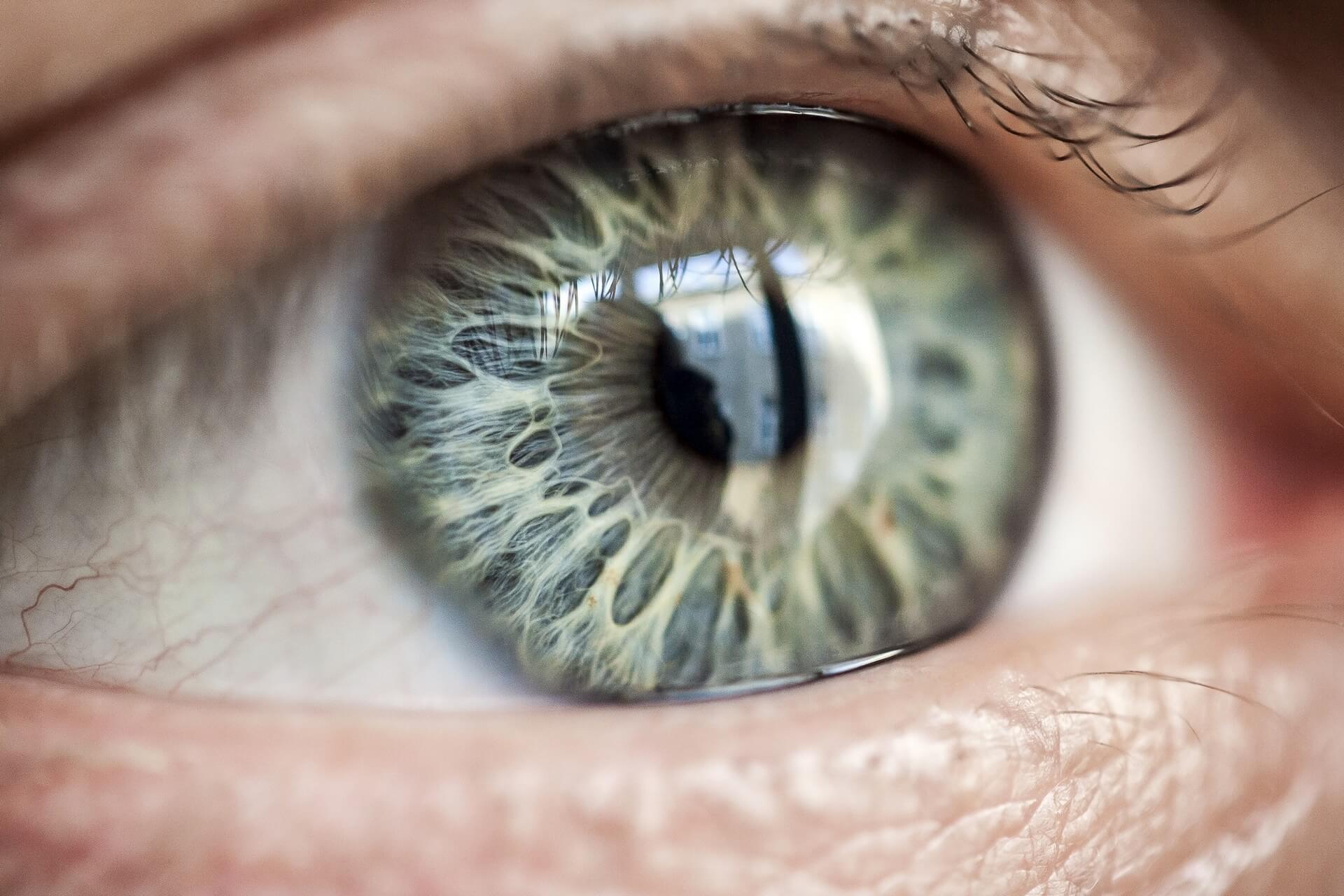
A corneal curvature, medically known as astigmatism, affects a large part of the population in Switzerland. While a normal eye is spherical like a football, an eye with astigmatism is more like a rugby ball. Incoming light is not bundled into a single point on the retina (focal point), but is distorted into a focal line.

Eye Laser

The visual experience: How does a patient with astigmatism see?
Imagine looking at the lights of Bahnhofstrasse or the illumination at Bellevue at night.

  • Without correction: Light sources flare, look like stars (“starbursts”), or leave streaks. A round dot looks oval or like a line. Faces in the distance are blurry, and even reading on a smartphone quickly tires your eyes.
  • The result: Many patients complain of headaches, burning eyes, and difficulty concentrating, especially when working at a screen in the Zurich financial district or during precision tasks.
  • After correction: The world suddenly looks “high-definition.” Contours are razor-sharp, individual leaves on trees on the Uetliberg are clearly visible, and driving at night becomes safe and relaxed again.

More than just diopters

In Zurich, a city known for quality of life, precision, and an active lifestyle, good vision is essential. Many of our patients come not only because of blurred vision, but because of the feeling of dependency.

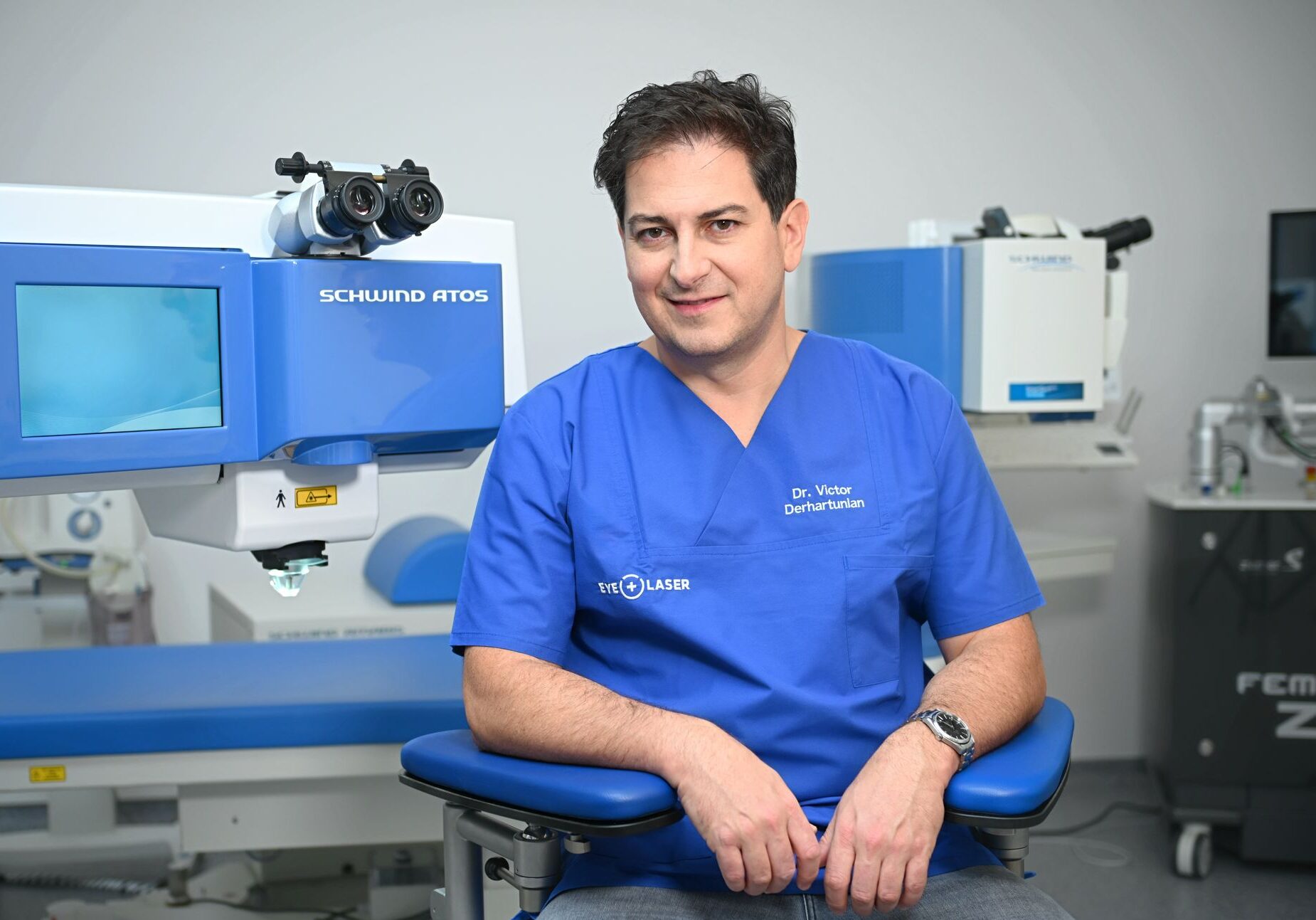
Dr. Victor Derhartunian
  • The “morning reach”: The first movement in the morning is reaching for the glasses on the nightstand.
  • The fear of loss: “What if I lose my contact lenses while swimming in the Limmat?”
  • Self-image: Especially in professional environments or during sports, many feel restricted by glasses or bothered by dry eyes (caused by contact lenses).

Expert opinion from Dr. Victor Derhartunian:
“In my years of experience as an eye surgeon in Zurich, I have learned: correcting a corneal curvature is not just about optics. It is about freedom. Patients often tell me that they only realize after the procedure how much energy it cost them to constantly compensate for their visual impairment. The psychological relief of waking up in the morning and seeing the time clearly is life-changing for many. We do not treat ‘pairs of eyes’ here, but people who want to maximize their quality of life.”

Why EyeLaser Zurich is a leader in astigmatism treatment

When correcting astigmatism, a ruthless optical rule applies: The axis must be correct.

If we laser nearsightedness and are off by a millimeter, the result is still acceptable. With astigmatism, an axis deviation of just 3 degrees already leads to a loss of effectiveness of over 10%. A deviation of 30 degrees would completely cancel out the effect.

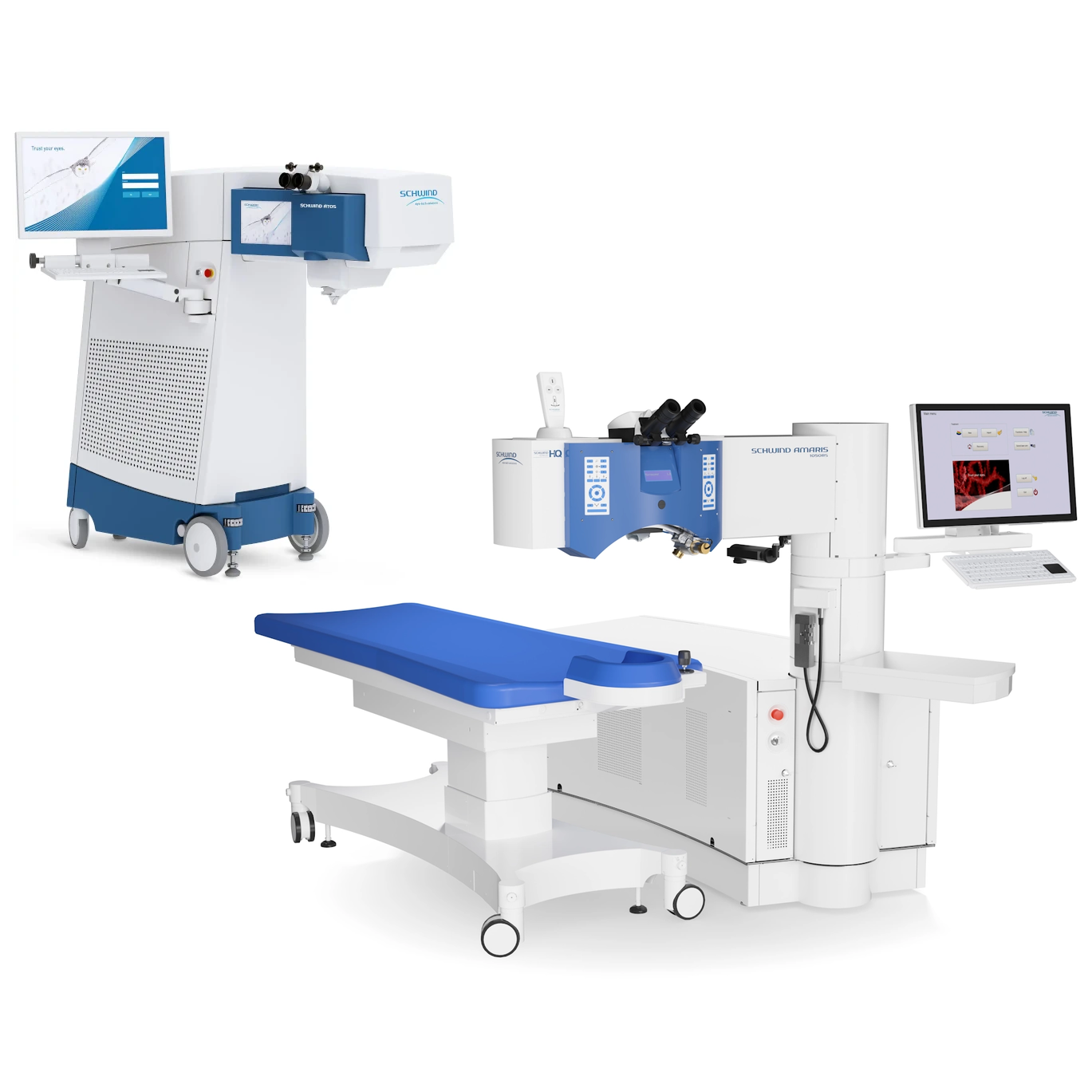
SCHWIND ATOS & SCHWIND AMARIS

The problem of rotation (cyclorotation)

When you move from a sitting to a lying position for surgery, your eye naturally rotates in the eye socket. With conventional lasers, this can lead to inaccuracies.

The solution: Static & Dynamic Cyclorotation Control

Our technology platform – consisting of the Schwind Amaris 1050 RS and the Schwind Atos – almost completely eliminates this risk:

  1. Detection: During the preliminary examination, the pattern of your iris is scanned while sitting and lying down.
  2. Tracking (Eye-Tracking): During the laser treatment, the system compensates for the eye’s rotation in real time (7D tracking). The laser virtually “rotates” along with your eye.
  3. Precision: This allows us to correct even complex and high astigmatism values in Zurich with a level of safety that was unthinkable just a few years ago.

Irregular astigmatism, cataracts & biomechanics

At EyeLaser, we specialize in cases where standard providers often reach their limits.

SmartSight Nova & CenTrax®

A. Regular vs. Irregular Astigmatism

  • Regular: The curvature is uniform. This affects 90% of patients and can be treated perfectly with laser.
  • Irregular: The corneal surface is irregular (e.g., due to scars or keratoconus). Caution is required here. With our Pentacam AXL diagnostics, we scan tens of thousands of points on your cornea.
    • The solution: We can often smooth irregular astigmatism with a specialized, topography-guided treatment (Corneal Wavefront), drastically improving visual quality.

B. Residual astigmatism after cataract surgery (Bioptics)

Many patients still have corneal curvature after cataract surgery because the artificial lens used did not correct it.

  • The solution: We perform a “fine-tuning.” Because the artificial lens sits stably in the eye, we gently refine the cornea with the laser. You can finally do without progressive glasses.
ICL

C. Biomechanics for high values

The cornea is living tissue. With very high corrections (e.g., > 4 dpt astigmatism), the shape can change slightly during healing (regression).

  • Our strategy: We operate with a focus on safety. We operate with a focus on safety. For extreme values, we schedule a follow-up check after 6 months. If the tissue has “relaxed,” we perform a small, precise follow-up correction. This guarantees long-term stability without risk to the corneal statics.

Find out what astigmatism is and how we treat it

Correct your astigmatism and enjoy a life without glasses and contact lenses

Traffic light system for suitability

Not every eye is the same. We use a simple traffic light system to roughly assess your suitability in advance.

Ein Leben ohne Brille – Erfolgsgeschichten aus Zürich
  • 🟢 Green light (Ideal):
    • Age: 18 to 85 years.
    • Regular astigmatism up to approx. 6 diopters.
    • Residual astigmatism after lens surgery (cataract).
    • Healthy eyes without active infections.
  • 🟡 Yellow light (Clarification needed):
    • Irregular astigmatism (suspicion of keratoconus).
    • Pregnancy/breastfeeding (hormones change the cornea).
    • Very high values (> 6 dpt) -> Here we check for implantable contact lenses (ICL).
    • Dry eyes (pre-treatment necessary).
  • 🔴 Red light (Seek alternatives):
    • Advanced keratoconus (crosslinking necessary).
    • Extremely thin cornea with high removal requirements.
    • Rheumatic diseases in acute flare-up.

Comparison of methods

Method Suitability for Astigmatism Special feature at EyeLaser Healing
Femto-LASIK The gold standard for most cases. Cyclorotation compensation for perfect axis alignment. Very fast (1 day).
TransPRK / SmartSurface Ideal for thinner corneas or athletes (martial arts). Contactless (“No Touch”), no flap complications. 3-5 days to everyday vision.
SmartSight (Lenticule) Modern “keyhole” technology. Gentle on nerves, fewer dry eyes (Atos laser). Fast (1-3 days).
ICL (Lenses) For extreme values (> 6 dpt astigmatism). The curvature is corrected by a toric lens inside the eye. Immediate improvement.
Bioptics After cataract surgery. Laser fine-tuning on the cornea with existing artificial lens. Fast.

Recommendations & contraindications for patients

To ensure we achieve the best result for you in Zurich, we ask for your cooperation.

Ein Leben ohne Brille – Erfolgsgeschichten aus Zürich

Before the examination:

  • Contact lens break: Please do not wear soft lenses for 1 week and hard lenses for 2–3 weeks before the pre-examination. Lenses reshape the cornea (“warpage”) and distort the axis measurements that are critical for astigmatism.

After Treatment:

  • Avoid rubbing: Do not rub your eyes under any circumstances during the first few days.
  • Protection: Wear the sunglasses provided by us (UV protection).
  • Patience: Fluctuations in visual acuity and slight “halos” are normal in the first few weeks, as the brain must learn the new image processing (neuroadaptation).

Do you suffer from distorted vision? Clarify your suitability in Zurich

Whether it’s congenital astigmatism, complex irregular shapes, or blurred vision after cataract surgery: we have the technology and experience to help you.

✔ Analysis for irregular astigmatism ✔ Testing of biomechanical stability ✔ Non-binding quick check in 15 min

Book a free appointment in Zurich now

FAQ – Comprehensive answers to your questions

Here you will find the most complete collection of questions regarding astigmatism correction, based on the concerns of our patients in Zurich.

Is the treatment painful?

No. The eye is completely numbed with drops. You will not feel any pain during the procedure, only a slight pressure or the insertion of the eyelid speculum with some methods. After the procedure, depending on the method (TransPRK), there may be a foreign body sensation, but this can be well treated with medication.

What happens if I blink or move my eye during lasing?

Nothing serious. Our lasers (Schwind Amaris & Atos) have high-performance eye tracking. They track the eye over 1000 times per second. If you twitch or blink, the laser stops immediately and only continues when the eye is centered again.

Is the result permanent or will the curvature return?

The modeling of the cornea performed by the laser is permanent. The removed tissue does not grow back. Changes in old age are usually due to the lens (presbyopia, cataracts), not a return of the original astigmatism.

Can astigmatism and nearsightedness be lasered at the same time?

Yes, that is the standard case. The laser models the cornea in a single step so that both the sphere (near/farsightedness) and the cylinder (astigmatism) are corrected.

How safe is the procedure?

Refractive surgery is one of the safest medical procedures worldwide. The risk of serious complications that permanently affect vision is in the low per mille range. In Zurich, we also use strict hygiene standards and multiple safety checks.

What is "irregular astigmatism" and is it treatable?

Unlike normal (regular) astigmatism, the cornea here is unevenly shaped, often due to scars or diseases such as keratoconus. Standard laser profiles do not help here. We use wavefront- or topography-guided treatments to smooth out the irregularities. In advanced keratoconus, however, other therapies (crosslinking, rings) are often necessary.

Am I too old for correction?

No. There is no rigid upper age limit. From approx. 45-50 years, when presbyopia sets in, we often recommend a lens replacement (CLE) with toric lenses instead of pure laser eye surgery to permanently correct both distance and near vision.

Can I still be lasered after cataract surgery?

Yes (“Bioptics”). If you still have residual curvature after cataract surgery and are dissatisfied, we can fine-tune the cornea with the laser. This is often more precise than another lens replacement.

I have very high astigmatism values (over 5 dpt). Is that possible?

Often yes, but it requires experience. We check the thickness of your cornea very carefully. If lasering is not safe (due to biomechanics), implantable toric contact lenses (ICL) are an excellent alternative with extremely high visual quality.

I have dry eyes. Is that an obstacle?

It is a warning signal (“yellow light”), but not an absolute exclusion criterion. We analyze your tear film. Methods such as ICL or SmartSight (lenticule extraction) are gentler on dry eyes than classic LASIK. We often treat the dryness before the procedure.

When can I return to work?

With Femto-LASIK and SmartSight, most patients already have such good vision the next day that office work is possible. For TransPRK, you should plan for 3-5 days.

How long am I not allowed to do sports?

Light sports (jogging, fitness) are often possible after 2-3 days. You should avoid swimming (due to the risk of infection from water) and saunas for approx. 2 weeks. Martial artists should prefer methods without a flap (TransPRK, SmartSight, ICL).

Does health insurance pay for the procedure?

In Switzerland, this is usually considered a “cosmetic procedure” and is not covered by basic insurance. Supplementary insurance sometimes covers a partial amount. There are exceptions for medical necessity (e.g., extremely high anisometropia or intolerance to visual aids), which must be checked individually.

Is the investment financially worthwhile?

In a high-price region like Zurich, the surgery often pays for itself after 3 to 5 years when you offset the costs for high-quality varifocals, toric contact lenses, and care products.

Why should I choose EyeLaser Zurich and not go abroad?

Safety and aftercare. In the event of complications (which are rare but possible), you need immediate help on-site and not on a plane. In addition, in Zurich, we use technology (cyclorotation compensation) that is often omitted in low-cost clinics but is crucial for astigmatism.

How long does the surgery itself take?

The laser removal often takes only a few seconds per eye (e.g., 1.3 seconds per diopter with the Schwind Amaris). The entire stay in the practice is approx. 1.5 to 2 hours.

Does the surgery affect my night vision?

Positively. Older laser procedures sometimes caused problems at night. Our modern lasers with “wavefront optimization” often improve contrast vision and reduce stray light (halos) compared to glasses.