What is keratoconus? Understanding the core issue

Trifokallinsen

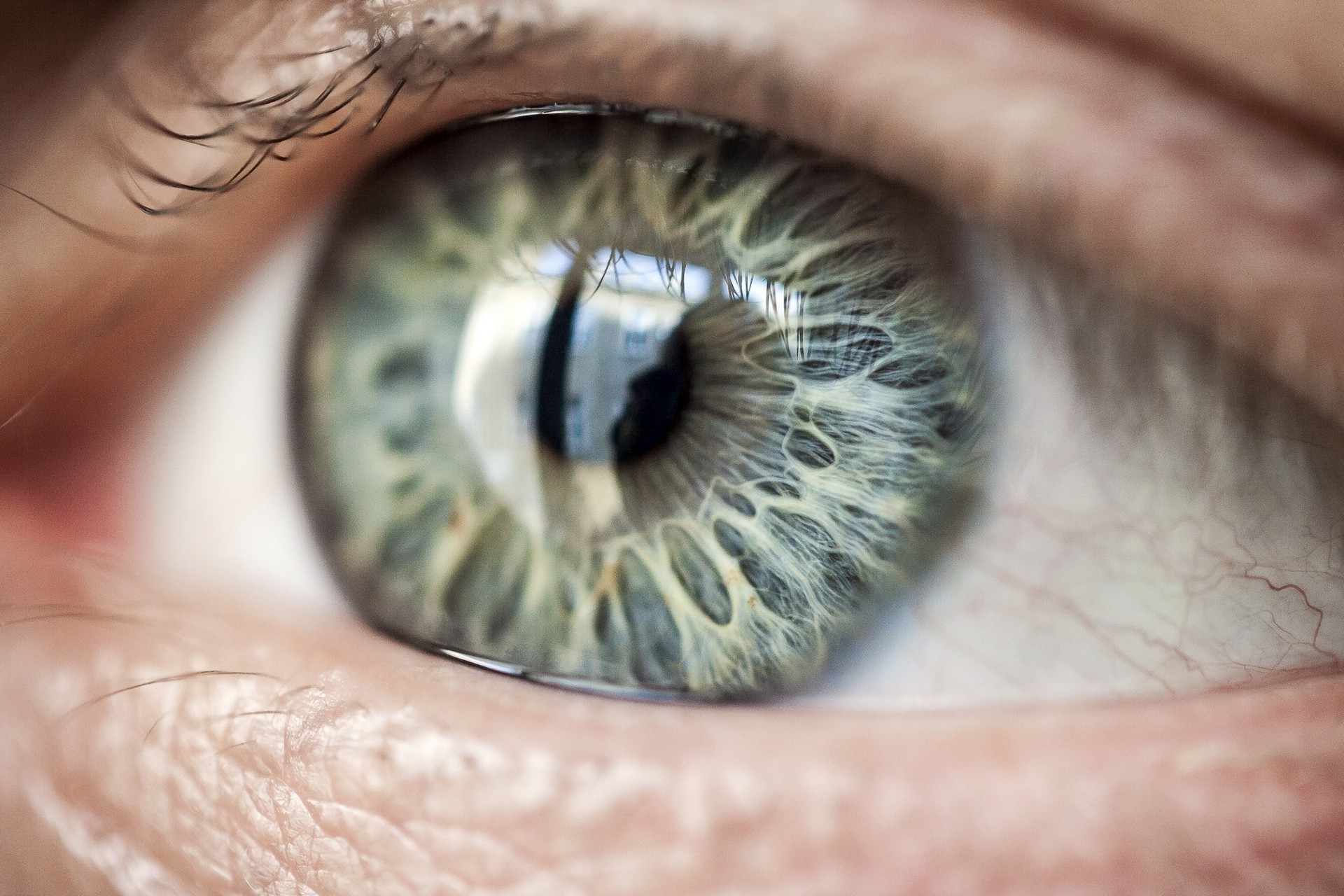
Keratoconus is a progressive, non-inflammatory eye disease in which the normally round cornea becomes thinner and bulges into a cone shape. This irregular shape leads to distorted vision and therefore a significant deterioration in eyesight. The disease usually develops during puberty and progresses until around the age of 30 to 40.

State-of-the-art diagnostics: The foundation of your safety

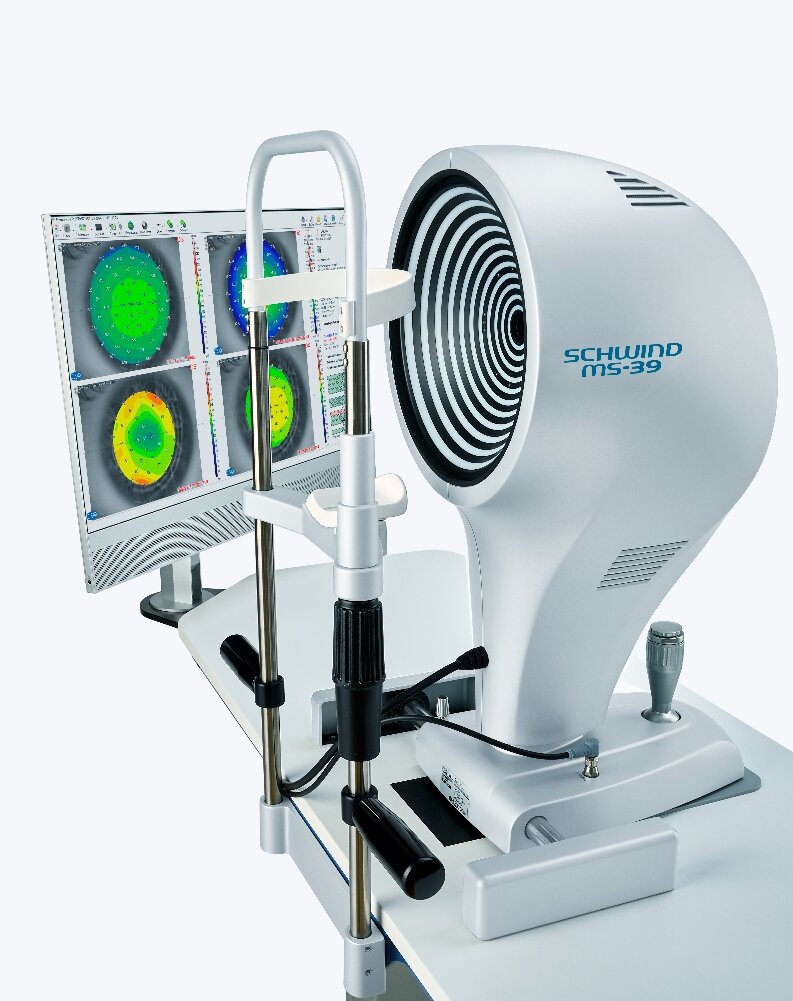
An accurate and early diagnosis is the crucial first step for successful keratoconus treatment. That is why at EyeLaser we rely on the most advanced diagnostic device currently available for keratoconus: the MS-39.

This device goes far beyond conventional corneal measurements and provides us—and therefore you—with a level of reassurance that is unmatched:

SCHWIND MS-39

Detailed epithelial thickness analysis

The MS-39 not only creates a three-dimensional map of your cornea, but also analyses the thickness of the epithelium, the outermost protective layer. Especially in early keratoconus, this layer often shows characteristic changes long before the disease becomes visible with other methods. This enables an even earlier and more precise diagnosis.

Pixel-precise progression monitoring

The MS-39’s ability to track changes at pixel level gives us unprecedented control in monitoring. We can determine objectively and with the highest accuracy whether your condition is progressing—crucial information for choosing the right time for treatment.

This technological advantage serves one purpose only: your safety and the certainty of receiving the best possible treatment based on the most precise data.

Your concerns are our mission

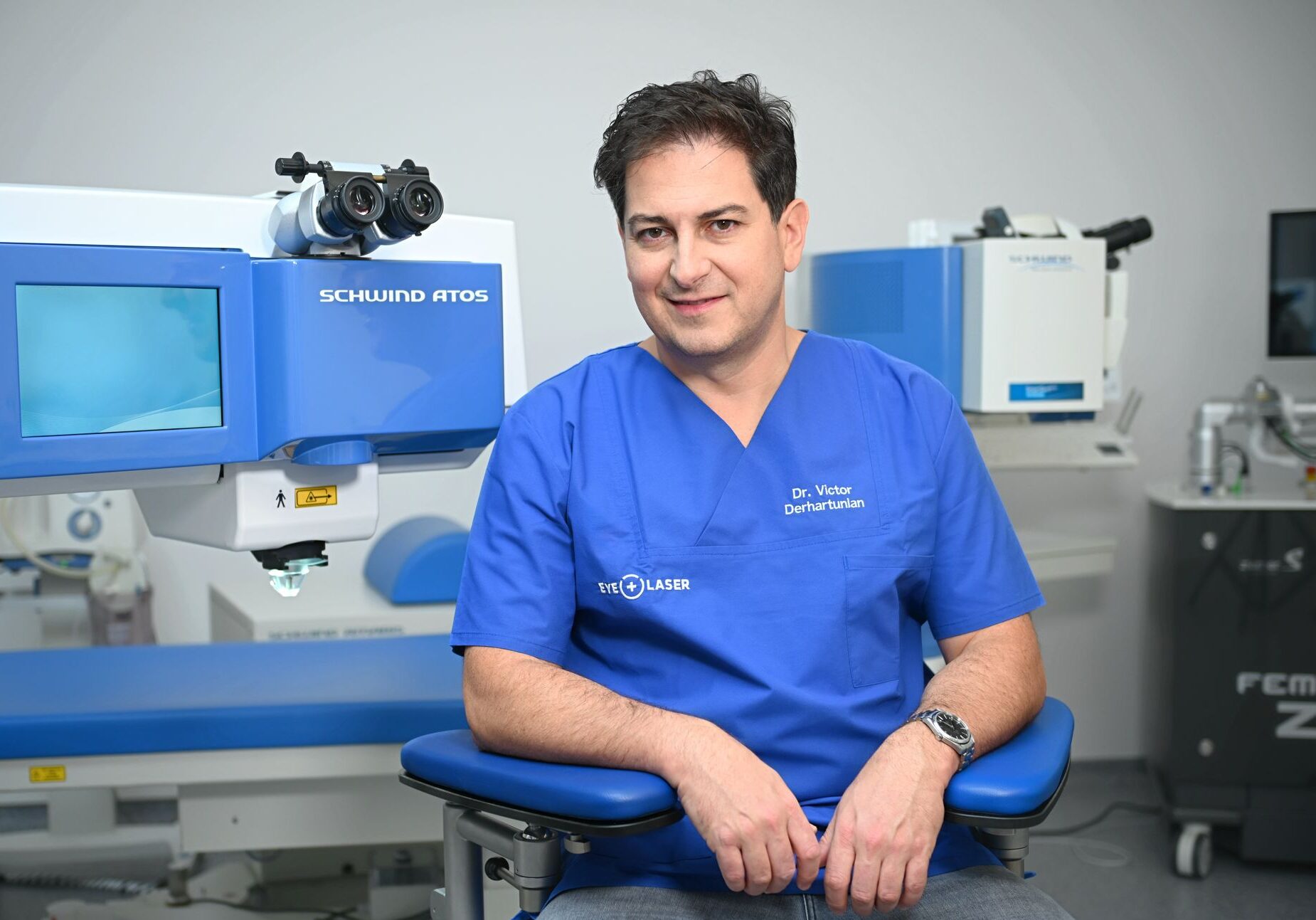
Dr. Victor Derhartunian

A diagnosis of “keratoconus” often triggers anxiety. Questions such as “Will I lose my eyesight?” or “Will I be able to continue working?” are normal and understandable. Our first task is to take that fear away.

A word from Dr Victor Derhartunian, Lead Surgeon at EyeLaser:
“My message to you is clear: with today’s technology, in the vast majority of cases we can stop the progression of the disease and give you a clear outlook for the future. Modern keratoconus treatment is more than just stabilisation; it is about giving you the best possible visual quality for your life. You are not alone on this journey.”

Our expertise: Experience that creates confidence

Dr. Victor Derhartunian

With a condition as complex as keratoconus, experience matters more than anything else. Dr Derhartunian brings expertise that is second to none in Switzerland:

  • Experience from the very beginning: He has been using the crosslinking procedure since its official CE approval in 2007, making him one of the first users in Europe.
  • Training with the pioneers: His specialist training at the University Eye Clinic in Frankfurt and his subsequent work at the renowned IROC Clinic in Zurich laid the foundation.
  • Learned directly from the inventor: At the IROC Clinic, he had the privilege of learning directly from Professor Theo Seiler, the inventor of crosslinking, and refining his techniques. As a “student of Professor Seiler”, he is committed to the highest standards of precision and safety.
  • Leading in combination therapies: Over the years, he has performed hundreds of crosslinking treatments, particularly in combination with advanced laser eye procedures—expertise that is crucial for restoring your vision.

This deep involvement in the development and refinement of the method gives you the certainty that at EyeLaser Zurich you are in the safest and most experienced hands.

Our treatment approach: Stabilisation and rehabilitation

Our treatment plan for keratoconus is clearly structured and pursues two main goals. We explain every step to you transparently and in an easy-to-understand way.

Important note on objectivity: An excellent non-surgical option to improve vision is wearing rigid gas-permeable (hard) contact lenses. They compensate for the irregular corneal surface and often enable excellent vision. The following surgical procedures are primarily a solution for patients who cannot tolerate contact lenses or who want a permanent correction.

Step 1: Stabilising the tissue—the foundation

The single most important goal is to stop the progression of keratoconus. For this, we use the gold standard:

  • Corneal crosslinking (CXL): This minimally invasive procedure strengthens the cornea through the combined use of vitamin B2 drops and UVA light. It makes the cornea stiffer and more resilient to prevent further bulging. In over 95% of cases, the disease is successfully stopped.
Step 2: Visual rehabilitation—for the best possible vision

Once the disease has been stopped, we focus on improving your vision. It is important to understand that crosslinking alone rarely improves vision. True rehabilitation is achieved through state-of-the-art, often combined procedures.

We offer the following treatment options at EyeLaser:

Augenlasern Zürich
  • Combination of crosslinking and laser eye surgery (e.g. topo-guided Trans-PRK)
    This state-of-the-art method is one of our key areas of focus. The goal is not only stabilisation, but also the regularisation of the corneal surface. With a topography-guided laser treatment, we specifically smooth the irregular cornea. This reduces disruptive optical errors (higher-order aberrations) and can significantly improve visual quality with and without glasses.
Eye Laser
  • State-of-the-art biological ring segments: CAIRS (Corneal Allogenic Intrastromal Ring Segments)
    Instead of artificial plastic implants (PMMA), at EyeLaser we use the most advanced and safest method: CAIRS. These are precisely shaped segments made from human donor corneal tissue . The decisive advantage is excellent biocompatibility: the natural tissue is optimally accepted by the body, drastically minimising the risk of complications such as rejection or inflammation. The CAIRS integrate fully into your own cornea, strengthen it structurally and gently reshape it to reduce bulging and improve visual quality.
  • Implantable contact lenses (ICL)
    After the cornea has been stabilised and regularised, residual refractive error may remain. If this is significant and the anatomy of the eye allows it, an implantable contact lens (ICL) can be used to achieve a high degree of independence from glasses.

Clinical example: Treating a complex case

Femto-LASIK 7D

To illustrate the possibilities, here is an example of a multi-stage treatment plan for a very advanced keratoconus case:

  • Step 1: Implantation of CAIRS to mechanically reduce extreme corneal curvature.
  • Step 2 (after stabilisation): Performing a combined topo-guided Trans-PRK with crosslinking to further smooth the corneal surface and stop the disease.
  • Step 3 (after further healing): If a high residual refractive error remains, implantation of an ICL lens for final vision correction.

The traffic-light system: Who is a suitable candidate for treatment?

Presbyopia Zurich

🟢 Green light:

  • Patients with documented progression of keratoconus.
  • Typically under 40 years of age.
  • Sufficient corneal thickness for a safe CXL procedure.
  • No central corneal scarring.


🟡 Yellow light:

  • Patients with a thin cornea or for whom special protocols are required.
  • Patients over 40 with slow progression.
  • Pregnant or breastfeeding women (treatment is postponed).


🔴 Red light:

  • Patients with keratoconus that is too advanced, pronounced scarring, or a cornea that is too thin.
  • Alternatives: Rigid gas-permeable contact lenses or, as a last resort, a corneal transplant (keratoplasty).

Your path to stable vision starts here

Do not let the uncertainty of keratoconus determine your future. Take the first decisive step. Book an appointment for a comprehensive diagnostic examination at our EyeLaser clinic in Zurich and find out which treatment options are best for you. Our expert team is ready to answer all your questions.

Have your keratoconus assessed in Zurich—book an appointment today!

FAQ: Frequently asked questions

What exactly is keratoconus and what are the first symptoms?

Keratoconus is a progressive deformation of the cornea that leads to visual disturbances. Early signs are often blurred vision, frequent changes in prescription, and increased sensitivity to light.

How can the progression of the disease be stopped?

The gold standard for treating progressive keratoconus is crosslinking (CXL), a procedure that strengthens the corneal structure and, in most cases, stops further progression of the disease.

How can vision be improved after stabilisation?

After crosslinking, state-of-the-art procedures such as specialised laser eye treatments, biological ring segments, or implantable lenses can regularise the cornea and significantly improve visual quality.

Why is the surgeon’s experience so crucial?

The surgeon’s experience is key to success. Dr Derhartunian has been using crosslinking since its introduction in 2007 and learned directly from the inventor of the method, Prof Seiler.

What non-surgical alternatives are available?

For many patients, rigid gas-permeable (hard) contact lenses are an excellent non-surgical option to achieve good vision. Surgical improvements are primarily an option when lenses are not tolerated.

What exactly is keratoconus?

Keratoconus is a condition in which the cornea becomes thinner and deforms into a cone shape, leading to irregular astigmatism and worsening vision.

What are the first symptoms?

Common early symptoms include blurred vision, rapid deterioration of eyesight, double vision in one eye, and increased sensitivity to light.

Is keratoconus hereditary?

Yes, there is a genetic component. If someone in your family has keratoconus, your risk is increased.

Is eye rubbing really harmful?

Yes, absolutely. Chronic eye rubbing is a major risk factor that can trigger or accelerate the disease.

Is the crosslinking treatment painful?

The procedure itself is painless thanks to anaesthetic drops. In the first 1–3 days afterwards, pain may occur, which can be well controlled with medication.

Does health insurance in Switzerland cover the costs?

Keratoconus treatment, including crosslinking, is a medically recognised procedure. In many cases, the costs are covered by basic health insurance after prior approval.

Will crosslinking alone improve my vision?

In most cases, the main goal of crosslinking is stabilisation, not visual improvement. A significant improvement in visual quality is almost always achieved through additional procedures such as a topography-guided laser treatment.

What are CAIRS and what is the advantage over other rings?

CAIRS are segments made from human donor corneal tissue, not plastic. Their excellent biocompatibility minimises the risk of complications such as rejection or inflammation compared with artificial implants.

Am I forced to have surgery?

No, absolutely not. We advise you objectively. If you manage well with rigid gas-permeable contact lenses and achieve excellent vision with them, there is often no reason for further surgical procedures to improve vision.