In brief

What is laser eye surgery? The essentials in 60 seconds

Laser eye surgery is the correction of myopia, hyperopia and astigmatism in which a laser reshapes the cornea by a few hundredths of a millimetre. At EyeLaser Zurich Dr Victor Derhartunian performs all laser procedures personally, with SmartSight, Femto-LASIK, Trans-PRK or EASE. Depending on the procedure, one eye costs between CHF 1’500 and CHF 3’000 in Zurich.

✓Procedures: SmartSight and SmartSight NOVA without a flap, Femto-LASIK with a flap, Trans-PRK and EASE on the surface; PTK treats diseases of the corneal surface.
✓Suitability: from 18 years, prescription stable for at least one year, healthy cornea; the limit is based on the recommendations of the KRC and on your corneal thickness.
✓Price per eye: Trans-PRK CHF 1’500, Femto-LASIK CHF 1’800, EASE CHF 2’000, SmartSight CHF 2’500, SmartSight NOVA CHF 3’000; presbyopia with PresbyMAX CHF 3’300.
✓Included: follow-up checks in the first three months, enhancement for up to ten years with a yearly check-up. The pre-examination (CHF 300) is credited; medication is available on prescription at the pharmacy.
✓If the laser is not suitable: an ICL lens without tissue removal or a lens exchange (for hyperopia from about 45, otherwise from about 55).
25’000refractive procedures performed personally by Dr Derhartunian
4,9 / 5from 118 Google reviewsAs of September 2026
Fixed priceThe price after the pre-examination is the final price, including three months of follow-up
Kreis 1Strehlgasse 33, two minutes on foot from Paradeplatz
Suitability

Am I suitable? The EyeLaser traffic light

A first assessment in one minute. It becomes binding only after your cornea has been measured; the full pre-examination shows which procedure suits your eyes.

Green light

Very good prerequisites

You are between 18 and 60 years old. Your prescription has been stable for at least twelve months. Your cornea is sufficiently thick and regularly shaped. No eye disease such as keratoconus, cataract or glaucoma. Realistic expectations of the result.

Amber light

The work-up decides

You tend to dry eyes. Your cornea is rather thin. An autoimmune disease is present. Your pupils are very wide in the dark. Then diagnostics and the choice of procedure decide, often SmartSight without a flap or the ICL lens.

Red light

No laser, but an alternative

Unstable prescription. Diagnosed keratoconus or another corneal disease. Advanced cataract or glaucoma. Pregnancy or breastfeeding. For many of these eyes the ICL lens is a suitable alternative, likewise without glasses: ICL in Zurich.

Book the pre-examination Book a free first consultation

Our procedures

Which laser eye surgery methods are available at EyeLaser Zurich?

Four laser procedures for vision correction, one laser procedure for presbyopia, one laser therapy and one lens for eyes that should not be lasered. The pre-examination shows which procedure fits.

SmartSight in ZurichLenticule extraction without a flapInside the cornea the laser separates a small disc of tissue (lenticule), which is removed through an opening of around 2 mm. For myopia and astigmatism, not for hyperopia. SmartSight NOVA additionally centres on the visual axis.CHF 2’500 per eye · NOVA CHF 3’000 · To the method →Femto-LASIK in ZurichWith corneal flapA femtosecond laser cuts a thin flap, and beneath it the excimer laser reshapes the cornea. For myopia, hyperopia and astigmatism; usually fit for everyday life the next day.CHF 1’800 per eye · wavefront-guided CHF 2’500 · To the method →Trans-PRK in ZurichSurface, no incisionThe excimer laser removes the outer layer and the tissue beneath it in one step, without any instrument touching the eye. Often the first choice for thin corneas and contact sports; recovery takes a few days longer.CHF 1’500 per eye · wavefront-guided CHF 2’500 · To the method →EASE in ZurichSurface, femtosecond laser onlyBeneath the epithelium the laser cuts a piece of tissue (lentoid), which is lifted off in one piece together with the epithelium, without UV light. Available at our clinic since September 2026, for myopia with little astigmatism; clinical experience is still short.CHF 2’000 per eye · To the method →PresbyMAXPresbyopia, from about 45A laser profile distributes distance and near vision across both eyes, as long as your own lens is clear. Usually combined with mild monovision.CHF 3’300 per eye · To the method →ICL lensWithout tissue removalAn additional lens in front of your own lens, removable again. For thin corneas, dry eyes or high values up to −25 D.CHF 4’500 per eye · To the method →PTKLaser therapy of the corneal surfaceIn recurrent corneal erosion and superficial scars, the laser smooths the surface so that the epithelium adheres again.CHF 1’500 per eye, self-pay · To the method →

Looking for ReLEx SMILE? EyeLaser Zurich does not offer SMILE; the comparable procedure at our clinic is SmartSight. SMILE or SmartSight?

By refractive error: Myopia · Hyperopia · Astigmatism · Presbyopia  |  For your decision: Methods compared · Laser eye surgery costs · Health insurance · Lens exchange

Decision aid

Which procedure suits which starting point?

The table shows the direction things usually take from your starting point. The recommendation becomes binding only after your cornea has been measured.

Your starting point Usually first choice Alternative Why
Myopia, cornea sufficiently thick SmartSight Femto-LASIK no flap, small opening, fewer corneal nerves severed
You need full visual acuity again very quickly Femto-LASIK SmartSight usually fit for everyday life the next day, widely studied for decades
Hyperopia Femto-LASIK from about 45 PresbyMAX or lens exchange; for high values ICL lens we do not use SmartSight, Trans-PRK or EASE for hyperopia
Thin cornea, martial arts, job with a risk of injury Trans-PRK EASE, SmartSight no flap that could shift from a blow
Values beyond the KRC limits or cornea too thin for any laser ICL lens – no tissue removal, the lens can be removed again
Pronounced dry eyes SmartSight after pre-treatment ICL lens fewer corneal nerves severed than with a flap; we treat dry eyes beforehand
From about 45: reading glasses are a nuisance, distance vision still good PresbyMAX for hyperopia, lens exchange your own lens is preserved
From about 55, or your own lens is becoming cloudy Lens exchange PresbyMAX, as long as the lens is clear corrects refractive error and presbyopia, and a cataract can no longer develop afterwards; from about 60 usually the better choice than the laser
What the measurement decides: We measure the front and back surfaces of the cornea, the epithelial thickness and the wavefront with the MS-39. Only these values show which procedure is safe for your eye. That is why we give you the binding price after the pre-examination.

Check my eligibility (about 45 seconds) Ask via WhatsApp

What is laser eye surgery, and who is it worthwhile for?

The five basic questions, answered briefly. Details are on the pages of the individual procedures.

What happens during laser eye surgery?

In laser eye surgery a laser reshapes the cornea, the clear window at the front of the eye, so that light is once again focused sharply on the retina. Depending on the procedure, this happens on the surface (Trans-PRK, EASE), beneath a thin flap (Femto-LASIK) or inside the cornea (SmartSight). Anaesthesia is given with drops, and both eyes are usually treated on the same day. At EyeLaser Zurich Dr Victor Derhartunian performs every laser procedure personally.

Which refractive errors can be treated with a laser?

Myopia, hyperopia and astigmatism. How much can be corrected does not depend on a fixed number of dioptres but on the recommendations of the Commission for Refractive Surgery (KRC) and on your corneal thickness. For presbyopia there is a dedicated laser profile, PresbyMAX. If the cornea is too thin or the values are too high, at EyeLaser Zurich the ICL lens corrects your vision without tissue removal.

Is laser eye surgery permanent?

The reshaping of the cornea is permanent; the removed tissue does not grow back. A small regression is possible: in a ten-year study, myopia after LASIK increased again by an average of 0.12 dioptres per year (Alió 2008); after SMILE the mean deviation after ten years was −0.35 dioptres (Blum 2019). Independently of this, presbyopia sets in from about 45. At EyeLaser Zurich an enhancement up to ten years after the procedure is included, with a yearly check-up.

Is laser eye surgery worth it?

That depends on your starting point and your everyday life. If you have worn contact lenses for years, you pay for them continuously; a laser correction at EyeLaser Zurich costs a one-off CHF 1’500 to CHF 3’000 per eye. In a review of 2’198 treated patients, 95.4 % were satisfied with the result after LASIK (Solomon 2009). From about 45 almost everyone still needs reading glasses, because the lens ages. You will find a sample calculation under Laser eye surgery costs.

What are the disadvantages of laser eye surgery?

The most common disadvantages are temporary: dry eyes and light effects such as halos in the first weeks to months. After surface procedures, recovery takes a few days longer. Rarely, a residual refractive error remains, which is corrected with an enhancement; infection or a bulging of the cornea are very rare. You will find all figures with sources under Laser eye surgery risks.

Results

What research shows about the procedures

Documented results per procedure, with source. The figures come from different studies and are not directly comparable with one another.

up to 98 %

SmartSight: 20/20 or better without correction

systematic review of six case series, 877 eyes, SCHWIND ATOS; range 59 to 98 % depending on series and time of measurement. PubMed 42573219

90.8 %

Femto-LASIK: 20/20 or better without correction

Sandoval et al. 2016, 97 publications, 67’893 eyes; 99.5 % better than 20/40, 0.61 % loss of two or more lines. PubMed 27531300

96 %

Trans-PRK with SmartSurfACE: 20/20 or better without correction

after six months, 98 % achieved 20/25 or better. Margarit et al. 2024, PubMed 39459588

87.5 %

ReLEx SMILE: 20/20 or better without correction

US approval study, 328 eyes, six months (FDA P150040); with the newer device generation VisuMax 800 93.2 %, 473 eyes, authors are consultants to the manufacturer. PubMed 40067668

These figures come from published studies and are not our own data. Study populations differ in baseline values, time of measurement and definition of the outcome, so the figures are not directly comparable with one another. What is realistic for your eye, we tell you after the pre-examination.

How does laser eye surgery work at EyeLaser Zurich?

Four steps from the first consultation to the yearly check-up. How the day of the procedure runs in detail is described under Day of surgery.

Free initial consultation: what happens there?

In the free initial consultation we go through your questions, the procedure and the costs with you, by video if you wish. It is conducted by our team, not by the doctor; you will see Dr Derhartunian at the pre-examination. The initial consultation cannot yet confirm your suitability, because the measurement of the cornea is still missing. It takes around 20 to 30 minutes.

What is measured at the pre-examination, and what does it cost?

The pre-examination takes around 90 minutes and costs CHF 300; if you go ahead with treatment, the amount is credited. We measure your glasses prescription, the shape and thickness of the cornea (tomography and epithelial map with the MS-39), wavefront, pupil size in the dark, tear film, eye pressure and retina. Because the pupils are dilated, you should not drive for around four hours afterwards. Please stop wearing contact lenses beforehand: soft lenses one week, rigid lenses four weeks, ortho-k lenses three months.

How long is there between the pre-examination and the procedure?

After the pre-examination you know the procedure, the risks and the binding price. There are at least 24 hours of reflection time between the informed-consent discussion and the procedure; you choose the date, usually a few days to weeks later. On Saturdays (every second week) pre-examinations take place, but no operations.

How does the day of the procedure work?

You come with an accompanying person and without face cream or eye make-up. Anaesthesia is given with drops; you may eat and drink normally. The procedure takes 15 to 20 minutes for both eyes; including preparation you are with us for around 1 to 1.5 hours. Afterwards you go home wearing protective glasses. You receive the drops for the time afterwards on prescription at the pharmacy; they are not included in the treatment price.

Which follow-up checks follow, and what applies to an enhancement?

Check-ups on the day after the procedure, after one week, and after one and three months; they are included in the price. After that we recommend the yearly check-up (CHF 180), which also serves as your ophthalmic screening. If a bothersome residual refractive error remains after healing, an enhancement up to ten years after the procedure is included, provided you have attended the yearly check-ups with us and the correction is medically sensible. Excluded are changes due to eye diseases, clouding of the lens or presbyopia.

Your recovery

How quickly will you see again after laser eye surgery?

Guide values from practice; they differ by procedure. The follow-up checks monitor your progress.

SURGERY DAY

15 to 20 minutes for both eyes, anaesthesia with drops. Afterwards rest, sunglasses, a companion for the way home.
DAY 1

Check-up with us. After SmartSight and Femto-LASIK usually fit for everyday life; after Trans-PRK and EASE a bandage contact lens protects the eye, and vision is still blurred.
WEEK 1

Screen work possible after SmartSight and Femto-LASIK; after surface procedures the bandage contact lens is removed and vision clears over several days. Non-contact sport after SmartSight from the second to third day, after Femto-LASIK, Trans-PRK and EASE after one week. No rubbing, no swimming pool, no sauna.
WEEK 2–12

Visual acuity stabilises, dryness and light effects subside. Contact sport, swimming and sauna after four weeks, in each case after clearance at the check-up; after Femto-LASIK contact sport with protective goggles.
MONTH 3–12

Final result. If a bothersome residual refractive error remains, an enhancement is performed. After that a yearly check-up; it is a prerequisite for the enhancement for up to ten years.

Transparency

How safe is laser eye surgery, and how common are complications?

The figures come from published studies on LASIK, PRK and SMILE, not from us. They do not apply one to one to every device and every eye.

Risks after laser eye surgery with frequencies from studies
Risk How common Source Course and what we do
Dry eyes around 28 % of eyes without previous complaints had mild to severe symptoms three months after LASIK Eydelman 2017 usually weeks to months; we treat beforehand and, if you are prone to it, choose a procedure without a flap
New light effects (halos, glare, starbursts) 43–46 % reported a new light symptom three months after LASIK Eydelman 2017 usually decreases with healing; we measure pupil size and centration beforehand
Enhancement needed 6.3 % of eyes after PRK and LASIK (855 eyes) Randleman 2009 included at EyeLaser Zurich for up to ten years, with a yearly check-up
Loss of two or more lines of best-corrected visual acuity 0.61 % (359 of 58’653 eyes after LASIK) Sandoval 2016 clarify the cause, treatment depending on the findings
Infection 0.035 % after LASIK (72 of 204’586 eyes); 0.20 % after surface procedures (39 of 18’651) Llovet 2010; de Rojas 2011 antibiotic drops, check-up the next day; report pain or redness immediately
Bulging of the cornea (ectasia) estimated at 90 per 100’000 eyes after LASIK, 20 after PRK, 11 after SMILE, in each case without identifiable risk factors Moshirfar 2021 excluded by tomography before the procedure; cross-linking if necessary
Corneal haze, surface procedures only 2 of 59 eyes mild grade after twelve months (Trans-PRK for high myopia) Antonios 2017 steroid drops, UV protection; for higher corrections mitomycin C (Majmudar 2015)
Problems with the flap (Femto-LASIK only) no reliable frequency data for today’s femtosecond lasers – for contact sport we recommend a procedure without a flap
Availability after the procedure: In the first 24 hours you can reach the surgeon around the clock. After that, during the day the surgeon is your contact person, at night the emergency department of the hospital on duty. All risks with sources: Laser eye surgery risks · When we advise against it

Suitability, technology and rare complications

Short summaries; the details are on the linked pages.

Who is suitable for laser eye surgery, and who is not?

Adults from 18 whose prescription has been stable for at least one year and who have a healthy, sufficiently thick and regularly shaped cornea have good prerequisites. Further assessment is needed for dry eyes, large pupils, autoimmune diseases or diabetes. We do not laser in cases of keratoconus, unstable prescription, pregnancy or breastfeeding. For each of these situations there is usually another way. All criteria: Requirements for laser eye surgery · Suitability test

Which equipment does EyeLaser Zurich use?

The SCHWIND ATOS femtosecond laser cuts the lenticule in SmartSight, the flap in Femto-LASIK and the lentoid in EASE. The SCHWIND AMARIS 1050RS excimer laser reshapes the cornea in Femto-LASIK, Trans-PRK, PresbyMAX and PTK; it tracks the eye with a 7D eye tracker, since 2026 in the NextGen generation. Measurements are taken with the MS-39 AL (tomography, epithelial map). EyeLaser Zurich is an official SCHWIND reference centre. More under Diagnostics and lasers.

What rare complications are there?

Infection occurred in 0.035 % of procedures after LASIK and in 0.20 % after surface procedures (Llovet 2010; de Rojas 2011). Bulging of the cornea (ectasia) is estimated at 90 per 100’000 eyes after LASIK and 11 after SMILE (Moshirfar 2021); it can be stabilised with cross-linking. Tomography before the procedure and selection according to the KRC recommendations lower the risk. All risks with frequencies: Laser eye surgery risks.

Honestly speaking

When we advise you against laser treatment

About one in ten enquirers leaves our pre-examination without a surgery date, and that is a good thing. These reasons lead to a no or to a different proposal with us:

iThe prescription is not yet stable. If it has changed by more than 0.5 dioptres in the last year, we wait. Otherwise we would correct a state that keeps shifting.
iThe cornea is too thin or unusually shaped. Then laser is not safe; the ICL lens is often the better solution here.
iThere is a suspicion of keratoconus. Laser would weaken the cornea further. We stabilise first.
iThe eyes are markedly dry. We treat that first; a laser treatment on a dry eye leads to unnecessarily long recovery.
iPregnancy or breastfeeding. The prescription fluctuates hormonally; we postpone.
iThe expectation does not match what is feasible. Anyone who at 55 expects never to need glasses again will be disappointed. We prefer to say so beforehand.
What this means for you: The pre-examination costs CHF 300 and is open-ended. If we advise against, you pay for this examination and in return have clarity about your eyes instead of a procedure you regret later. If you are treated, we credit the CHF 300.
Costs and instalments

What laser eye surgery costs per month

Fixed prices per eye, follow-up checks of the first three months included. For six months you pay interest-free directly with us, without a bank check. Longer terms run through our partner HeyLight.

Calculation examples for both eyes. HeyLight: 12 to 36 months, effective annual rate 9.9 %, financing amount CHF 200 to 6’500, example values rounded. Granting credit is prohibited if it leads to over-indebtedness (Art. 3 UCA).

Procedure per eye both eyes 6 months, 0 %, with us HeyLight 12 / 24 / 36 months
Trans-PRK Standard CHF 1’500 CHF 3’000 6× CHF 500 12× CHF 263 / 24× CHF 138 / 36× CHF 96
EASE CHF 2’000 CHF 4’000 6× CHF 667 12× CHF 351 / 24× CHF 184 / 36× CHF 128
Femto-LASIK Standard CHF 1’800 CHF 3’600 6× CHF 600 12× CHF 316 / 24× CHF 165 / 36× CHF 115
SmartSight CHF 2’500 CHF 5’000 6× CHF 833 12× CHF 438 / 24× CHF 230 / 36× CHF 160
Femto-LASIK Wavefront CHF 2’500 CHF 5’000 6× CHF 833 12× CHF 438 / 24× CHF 230 / 36× CHF 160
Trans-PRK wavefront-guided CHF 2’500 CHF 5’000 6× CHF 833 12× CHF 438 / 24× CHF 230 / 36× CHF 160
SmartSight NOVA CHF 3’000 CHF 6’000 6× CHF 1’000 12× CHF 526 / 24× CHF 275 / 36× CHF 192
PresbyMAX CHF 3’300 CHF 6’600 6× CHF 1’100 — / — / —

Lens procedures are not listed here: the ICL lens costs CHF 4’500 per eye, the lens exchange CHF 5’000 per eye. Both exceed the HeyLight maximum for both eyes; we arrange an individual payment solution for them.

Touch-up included

up to 10 years

If a disturbing residual error remains after stabilisation, we correct it with the laser at no extra cost, up to ten years after the procedure. The prerequisite is the annual check with us. The checks of the first three months are included in the fixed price; the subsequent annual check costs CHF 180 and is at the same time your ophthalmic check-up.

Pre-examination CHF 300

is credited

The full pre-examination takes around 90 minutes and provides the basis for deciding on all procedures. If you decide on a treatment, we deduct the amount from the treatment price.

Taxes

Medical expenses

Medical expenses you bear yourself are deductible insofar as they exceed five per cent of net income (Art. 33 para. 1 let. h DBG); the same rate applies in the Canton of Zurich, in the Canton of St. Gallen it is two per cent. Circular no. 11a of the Federal Tax Administration of 26 May 2026 names “laser eye surgery” explicitly as medical expenses for the first time; it applies from the 2027 tax period. We issue all receipts. Details on health insurance and supplementary insurance on the health insurance page. This information is general in nature and does not replace tax advice.

Eye surgery with Swiss precision

Star icon

Quality is in our DNA

Everything we do is optimised down to the very finest detail.

Eye icon

There’s a right way and a wrong way

The right clinic is neither too cheap nor too costly. The right clinic is precisely right.

Like icon

Precise planning

Every vision correction is planned precisely for your eyes.

Star icon

Quality is in our DNA

Everything we do is optimised down to the very finest detail.

Eye icon

There’s a right way and a wrong way

The right clinic is neither too cheap nor too costly. The right clinic is precisely right.

Like icon

Precise planning

Every vision correction is planned precisely for your eyes.

Three steps to your decision

From first contact to a binding price: this is how the path to treatment at EyeLaser Zurich works.

Eyelaser Lens Replacement

Check your suitability

Seven questions, about 45 seconds, no contact details: the suitability test shows which procedures may be an option.

EyeLaser Klinik an der Strehlgasse 33 in Zürich

Free initial consultation

Our team answers your questions about the procedure, costs and appointments, by video if you prefer. Book a free initial consultation

Visuelle Freiheit ohne Brille geniessen – EyeLaser Zürich

Pre-operative examination

CHF 300, credited towards your treatment; for cataract it is billed to basic health insurance. Afterwards you receive a recommendation for the suitable procedure and a binding price.

Eyelaser Lens Replacement

Check your suitability

Seven questions, about 45 seconds, no contact details: the suitability test shows which procedures may be an option.

EyeLaser Klinik an der Strehlgasse 33 in Zürich

Free initial consultation

Our team answers your questions about the procedure, costs and appointments, by video if you prefer. Book a free initial consultation

Visuelle Freiheit ohne Brille geniessen – EyeLaser Zürich

Pre-operative examination

CHF 300, credited towards your treatment; for cataract it is billed to basic health insurance. Afterwards you receive a recommendation for the suitable procedure and a binding price.

Meet Your Eye Surgeons in Zurich Personal care from trusted vision correction experts.

Discover our laser eye surgeons in the heart of Zurich

Dr. Victor Derhartunian
Ophthalmologist, specialist in refractive surgery
FEBO, FWCRS

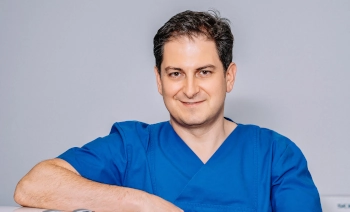
Having learned his craft from the two pioneers of laser surgery, Dr. Victor Derhartunian has performed some 25,000 refractive procedures. The head eye surgeon at EyeLaser in Zurich can consult his patients in 5 languages.

LEARN MORE
Dr. med. Valery Vinzent Wittwer
Ophthalmologist and Eye Surgeon
FEBO

Dr. Valery Vinzent Wittwer joined the EyeLaser Zurich team in 2024. He specializes in lens surgery and performs refractive lens exchange at our clinic.

Learn more
Dr. med. Myron Kynigopoulos, Augenchirurg bei EyeLaser Zürich
Dr. med. Myron Kynigopoulos
Ophthalmologist and Eye Surgeon
FEBO

Dr. med. Myron Kynigopoulos is an ophthalmologist and eye surgeon, FEBO. At EyeLaser Zurich he performs cataract and lens surgery.

Dr. Victor Derhartunian
Ophthalmologist, specialist in refractive surgery
FEBO, FWCRS

Having learned his craft from the two pioneers of laser surgery, Dr. Victor Derhartunian has performed some 25,000 refractive procedures. The head eye surgeon at EyeLaser in Zurich can consult his patients in 5 languages.

LEARN MORE
Dr. med. Valery Vinzent Wittwer
Ophthalmologist and Eye Surgeon
FEBO

Dr. Valery Vinzent Wittwer joined the EyeLaser Zurich team in 2024. He specializes in lens surgery and performs refractive lens exchange at our clinic.

Learn more
Dr. med. Myron Kynigopoulos, Augenchirurg bei EyeLaser Zürich
Dr. med. Myron Kynigopoulos
Ophthalmologist and Eye Surgeon
FEBO

Dr. med. Myron Kynigopoulos is an ophthalmologist and eye surgeon, FEBO. At EyeLaser Zurich he performs cataract and lens surgery.

From the consultation

Two paths, two procedures

Two typical starting points from our practice. Names changed, courses and quotes with the consent of those concerned.

Laura S., 32, marketing, Zurich

SmartSight

Starting point: −6 dioptres and dry eyes from contact lenses in the air-conditioned office. Jogging and swimming with a visual aid was awkward every time.

Decision: The corneal analysis favoured SmartSight, because fewer corneal nerves are cut and the tear film is spared.

“The freedom to wake up in the morning and see the clock on the wall sharply is indescribable. In sport I finally feel unrestricted.”

Michael B., 48, project manager, Winterthur

Lens exchange with EDOF lens

Starting point: Beginning presbyopia. The constant switching between distance and reading glasses at work became a burden.

Decision: A lens exchange with an EDOF lens that covers distance, screen distance and near together and prevents cataract.

“I was sceptical whether you really see well at all distances again. The result exceeded my expectations.”

Read more patient reports

What laser eye surgery procedures are there? Dr Derhartunian explains

In this video, Dr. Victor Derhartunian explains which laser eye treatments are available at EyeLaser Zurich:

One location, in the heart of Zurich

EyeLaser is at Strehlgasse 33 in Kreis 1, five minutes on foot from the main station near Rennweg. Opening hours: Monday to Friday 09:00–18:00, Saturday every second week for pre-examinations and info checks, without operations.

🚆

By train and tram

From Zurich main station five minutes on foot via Bahnhofstrasse, or tram 6, 7, 11, 13, 17 to the Rennweg stop, then two minutes on foot.

🚗

By car

Urania or Jelmoli car park, around five minutes on foot from either. Route in Google Maps.

Easy to reach from all over Switzerland

Many of our patients travel by SBB. Treatment and all follow-up checks take place at EyeLaser in Zurich, following a fixed quality assurance schedule.

Frequently asked questions about laser eye surgery

The questions we are asked most often in our Zurich consultation, answered briefly and without embellishment.

Which laser eye surgery methods does EyeLaser offer in Zurich?

EyeLaser Zurich offers four laser procedures for vision correction: SmartSight (also as NOVA) without a flap, Femto-LASIK with a flap, and Trans-PRK and EASE on the corneal surface. In addition there are PresbyMAX for presbyopia and PTK as a therapy of the corneal surface. If the cornea is not suitable for any laser, the ICL lens or a lens exchange comes into question (for hyperopia from about 45, otherwise from about 55). The measurement of your cornea shows which procedure fits.

What does laser eye surgery cost in Zurich?

All prices are per eye and are fixed prices including the follow-up checks of the first three months; thereafter the annual check is chargeable. Trans-PRK CHF 1’500, Femto-LASIK Standard CHF 1’800, SmartSight Standard CHF 2’500, SmartSight NOVA CHF 3’000, PresbyMAX CHF 3’300, ICL lens CHF 4’500, lens exchange CHF 5’000. The pre-examination costs CHF 300 once and is credited towards a treatment. You find an overview on the page laser eye surgery costs.

Can I pay for the treatment in instalments?

Yes. Directly at EyeLaser Zurich you pay in six monthly instalments, interest-free and without a bank check, for SmartSight for example CHF 417 per month and eye. For longer terms we refer you to heylight; a credit check and interest apply there. We calculate the exact instalment for you at the pre-examination.

Does health insurance cover the costs?

Basic insurance (KVG) pays for laser eye surgery only in justified exceptions, for example with a large difference in prescription between the two eyes, and only with cost approval before the procedure. Many supplementary insurances contribute, for example CHF 500 to CHF 1’500 depending on the product. EyeLaser Zurich supports you with the application and issues all receipts. Details: Laser eye surgery and health insurance.

Is the treatment painful?

The procedure itself is largely painless thanks to anaesthetic eye drops. You feel slight pressure, nothing more. After SmartSight and Femto-LASIK the eyes typically burn for a few hours. After Trans-PRK the healing of the surface is noticeable: here expect two to three unpleasant days, which we accompany with painkillers and a bandage lens.

When can I work and drive again?

After SmartSight and Femto-LASIK most patients are fit for office work and driving the following day, as soon as the legal visual acuity is reached and we have confirmed it at the check. After Trans-PRK this usually takes three to five days.

Are both eyes treated on the same day?

In the vast majority of cases, yes. Both eyes are treated one after the other in the same session. You go through preparation, procedure and healing only once. With today’s procedures that is the international standard.

What are the risks?

The most common are temporary dry eyes and light effects such as halos; they usually subside within weeks to months. In one study 6.3 % of eyes needed an enhancement (Randleman 2009); at EyeLaser Zurich it is included for up to ten years. Infections (0.035 % after LASIK) and bulging of the cornea are rare. You will find all risks with frequency and source under Laser eye surgery risks.

What if the result is not right?

If your prescription deviates after healing, we correct it. This touch-up is included for up to ten years after the procedure; the prerequisite is the annual, chargeable follow-up checks with us. For emergencies: during the first 24 hours after the procedure your surgeon can be reached around the clock.

I have dry eyes. Can I still have laser surgery?

Usually yes, but not immediately. We treat the dry eyes first, because a laser treatment on a dry eye prolongs recovery unnecessarily. Once the tear film is stable, we prefer SmartSight, because fewer corneal nerves are cut. More under dry eyes.

When may I do sport, swim or go to the sauna again?

Light exercise such as jogging or fitness is possible again after a few days. With contact sport, swimming in the lake or in chlorinated water and sauna visits, wait two to four weeks so that the cornea heals safely. Skiing is possible again after about two weeks, with good UV protection.

I do not live in Zurich. How does aftercare work?

Treatment and follow-up checks take place with us in Zurich, following a fixed schedule on the following day, after one week, after one month and after three months, then annually. Basel, Bern, Lucerne, St. Gallen, Winterthur and Zug reach us by SBB in 19 to 60 minutes direct, and we schedule appointments so that they can be combined with one trip.

Sources

The evidence for the figures on this page, collapsed.

Sources
  1. Alió JL, Muftuoglu O, Ortiz D et al. Ten-year follow-up of laser in situ keratomileusis for myopia of up to −10 diopters. Am J Ophthalmol 2008;145:46–54. PMID 18154754
  2. Antonios R, Abdul Fattah M, Arba Mosquera S et al. Single-step transepithelial versus alcohol-assisted photorefractive keratectomy in the treatment of high myopia. Br J Ophthalmol 2017;101:1106–1112. PMID 27941045 (one author is an employee of SCHWIND)
  3. Blum M, Lauer AS, Kunert KS, Sekundo W. 10-Year Results of Small Incision Lenticule Extraction. J Refract Surg 2019;35:618–623. PMID 31610002
  4. de Rojas V, Llovet F, Martínez M et al. Infectious keratitis in 18,651 laser surface ablation procedures. J Cataract Refract Surg 2011;37:1822–1831. PMID 21865006
  5. Eydelman M, Hilmantel G, Tarver ME et al. Symptoms and Satisfaction of Patients in the Patient-Reported Outcomes With LASIK (PROWL) Studies. JAMA Ophthalmol 2017;135:13–22. PMID 27893066
  6. Llovet F, de Rojas V, Interlandi E et al. Infectious keratitis in 204 586 LASIK procedures. Ophthalmology 2010;117:232–238. PMID 20006909
  7. Majmudar PA, Schallhorn SC, Cason JB et al. Mitomycin-C in corneal surface excimer laser ablation techniques. Ophthalmology 2015;122:1085–1095. PMID 25795477
  8. Moshirfar M, Tukan AN, Bundogji N et al. Ectasia After Corneal Refractive Surgery: A Systematic Review. Ophthalmol Ther 2021;10:753–776. PMID 34417707
  9. Randleman JB, White AJ, Lynn MJ et al. Incidence, outcomes, and risk factors for retreatment after wavefront-optimized ablations with PRK and LASIK. J Refract Surg 2009;25:273–276. PMID 19370822
  10. Sandoval HP, Donnenfeld ED, Kohnen T et al. Modern laser in situ keratomileusis outcomes. J Cataract Refract Surg 2016;42:1224–1234. PMID 27531300
  11. Solomon KD, Fernández de Castro LE, Sandoval HP et al. LASIK world literature review: quality of life and patient satisfaction. Ophthalmology 2009;116:691–701. PMID 19344821
  12. Kommission Refraktive Chirurgie (KRC) of DOG and BVA: Bewertung und Qualitätssicherung refraktiv-chirurgischer Eingriffe. augeninfo.de/krc, as of 2022
Next step

Two ways to find out whether laser eye surgery is an option for you

The pre-examination is the binding answer: we measure your cornea and then know your procedure, your fixed price and your risks.

1 · Free first consultation

Around 30 minutes, in person or by video. You learn which procedures come into consideration for you at all and what the next steps look like.

Book a first consultation

2 · Pre-examination in Zurich

Around 90 minutes, CHF 300, open-ended. Afterwards you know your procedure, your binding price and your risks. If you are treated, the amount is credited.

Book an appointment

Prefer to call? +41 44 221 95 02, Monday to Friday 09:00–18:00.