In brief

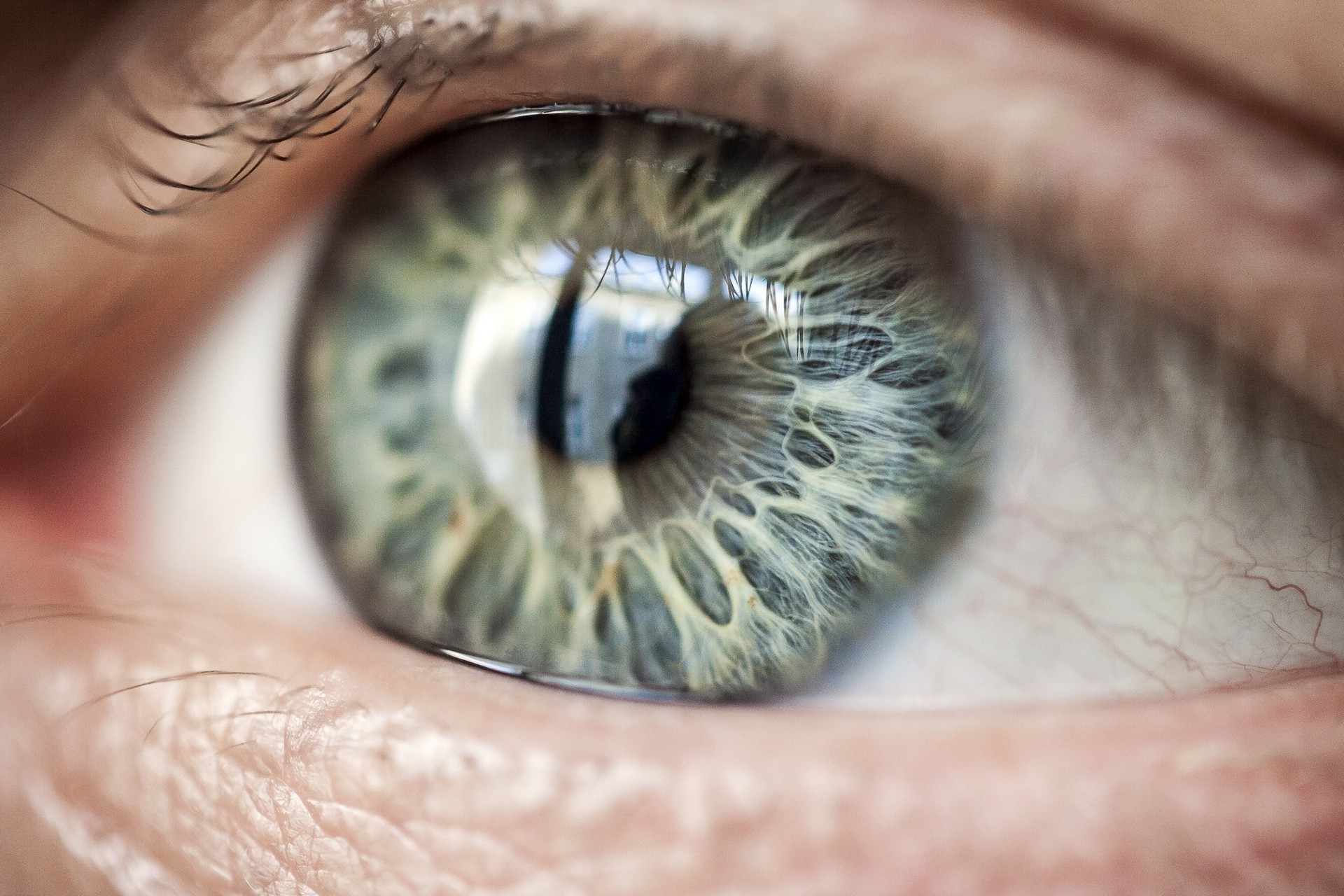
What is Femto-LASIK?

Femto-LASIK is a form of LASIK in which a femtosecond laser cuts the corneal flap; beneath it, the AMARIS 1050RS excimer laser reshapes the cornea. At EyeLaser Zurich, Dr. Victor Derhartunian performs Femto-LASIK personally. In Zurich it costs CHF 1’800 per eye, wavefront-guided CHF 2’500, and you are usually fit for everyday life the following day.

Femto-LASIK at EyeLaser Zurich at a glance
Method LASIK with a flap created by the femtosecond laser
Laser SCHWIND ATOS (flap), SCHWIND AMARIS 1050RS with 7D eye tracker (correction)
Suitable for Short-sightedness, long-sightedness (KRC limit usually at +3 to +4 D) and astigmatism; limits according to KRC and corneal thickness
Not suitable for a thin or irregular cornea, keratoconus, contact sport or a profession with a risk of blows (then a procedure without a flap), pregnancy and breastfeeding
Duration about 15 minutes for both eyes
Anaesthesia Eye drops
Back at the office usually after one to two days
Driving after clearance at the check-up, usually after 1 to 3 days
Sport Sport without body contact after one week; contact sport (with protective goggles), swimming and sauna after four weeks, in each case after clearance at the check-up
Follow-up checks Day 1, week 1, month 1, month 3 included; thereafter annual check CHF 180
Enhancement included up to ten years after the procedure, provided you attend the annual check with us
Surgeon Dr. med. univ. Victor Derhartunian personally
Price per eye CHF 1’800; wavefront-guided CHF 2’500; pre-examination CHF 300, credited
25’000refractive procedures performed personally by Dr Derhartunian
CHF 1’800fixed price per eye, wavefront variant CHF 2’500
4,9 / 5from 118 Google reviewsAs of September 2026
Kreis 1Strehlgasse 33, two minutes on foot from Paradeplatz

Femto-LASIK 7D: Proven precision and versatility

Phake ICL-Linse

While newer procedures such as SmartSight are excellent options for certain eyes, Femto-LASIK 7D is the globally established and most thoroughly scientifically documented procedure in refractive surgery. It is a procedure that combines high precision, safety, and a very broad range of applications.

Femto-LASIK demonstrates its strengths particularly in the correction of farsightedness (hyperopia) as well as in the treatment of presbyopia in combination with our specialised PresbyMAX procedure.

Prices & services

What does Femto-LASIK cost in Zurich?

Transparent, binding and without hidden costs — as Swiss medicine should be.

FIXED PRICE

Femto-LASIK — the proven standard
CHF 1’800 per eye
For short-sightedness, long-sightedness and astigmatism. Wavefront variant: CHF 2’500 per eye.
Included in the fixed price
✓Follow-up checks of the first three months included — the annual check thereafter is chargeable
✓Fixed price — no surcharges after the preliminary examination
✓Enhancement included — if ever needed, at no extra cost
✓Emergency contact after surgery — your surgeon can be reached around the clock during the first 24 hours
✓Preliminary examination CHF 300 — credited towards the treatment
✓Six months interest-free directly with us (CHF 300 per month and eye); longer terms via heylight with credit check and interest
Charged separately
iMedication and eye drops after the procedure — on prescription from the pharmacy
iAnnual check CHF 180
Results

How good are the results of Femto-LASIK?

LASIK is the most widely studied laser procedure. The figures come from an analysis of 97 publications with 67’893 eyes (Sandoval 2016) and from a review of patient satisfaction (Solomon 2009).

99.5 %

saw better than 20/40 without glasses, the usual threshold for a driving licence

59’503 of 59’825 eyes (Sandoval 2016)

90.9 %

were within ±0.5 dioptres of the target correction

59’954 of 65’974 eyes (Sandoval 2016)

0.61 %

lost two or more lines of best-corrected visual acuity

359 of 58’653 eyes (Sandoval 2016)

95.4 %

were satisfied with the result

2’097 of 2’198 patients treated, 19 studies (Solomon 2009)

These values come from published studies and are not our own figures. They cover different devices and years; we will tell you what is realistic for your eye after the pre-examination.

Your recovery

How your recovery after Femto-LASIK proceeds

Realistic guide values from practice; your personal course is closely monitored at the follow-up checks.

SURGERY DAY

A few hours of watering and burning, then rapid improvement.
DAY 1

The “wow effect”: usually sharp vision already. Follow-up check at the clinic.
DAYS 2–3

Work and screens without difficulty, driving after medical clearance.
WEEKS 1–2

Sport without body contact after one week, after clearance at the check-up. Do not rub your eyes, avoid eye make-up.
AFTER 4 WEEKS

Contact sport with protective goggles, sauna and swimming possible again.
MONTHS 1–3

Final result stable, accompanied by the follow-up checks.

Transparency

What are the risks of Femto-LASIK, and how common are they?

The figures come from published LASIK studies, not from us.

Risks after LASIK with frequencies from studies
Risk How common Source Course and what we do
Dry eyes about 28 % of those previously free of symptoms had symptoms after three months Eydelman 2017 usually weeks to months; drops, and if you are prone to dry eyes, preferably a procedure without a flap
New light effects (halos, glare) 43–46 % reported a new light-related symptom after three months Eydelman 2017 usually decreases; consider wavefront-guided treatment for large pupils
Enhancement needed 6.3 % of eyes Randleman 2009 included for up to ten years, with annual check
Loss of two or more lines 0.61 % Sandoval 2016 Clarify the cause, treatment depending on the findings
Infection 0.035 % (72 of 204’586 eyes) Llovet 2010 Antibiotic drops, check-up the following day
Bulging of the cornea (ectasia) 0.033 % over eight years (10 of 30’167 eyes); estimated 90 per 100’000 Bohac 2018; Moshirfar 2021 Tomography before the procedure, selection according to KRC; crosslinking if necessary
Problems with the flap no reliable frequency figure for today’s femtosecond lasers – do not rub your eyes in the first few days; for contact sport, a procedure without a flap
Dissatisfaction with the result 1.2 % (129 of 9’726) Sandoval 2016 Enhancement or another solution after measurement
Your safety net: Enhancement included for up to ten years after the procedure, provided you attend the annual check with us. In the first 24 hours, you can reach the surgeon around the clock; after that, the surgeon during the day, and at night the emergency department of the hospital on duty.

What are the benefits of wavefront-guided Femto-LASIK?

Hand pointing to the lens in an anatomical eye model, with an enlarged lens model beside it

Imagine your refractive error like a fingerprint. The standard treatment corrects sphere and cylinder; the wavefront-guided treatment (CHF 2’500) also takes higher-order aberrations into account. Our strength lies in so-called “Customized Treatments”—wavefront-optimised, customised treatments.

  • Like a bespoke suit for your eye: Instead of a standard correction, we create a high-resolution, three-dimensional map of your eye. This analysis also captures the finest individual optical imperfections (so-called higher-order aberrations), which are crucial for the quality of your vision, especially at night.
  • The goal: optimal visual outcome: Based on this unique “fingerprint”, the laser treatment is tailored precisely to your eye. The goal is not only that you see sharply, but that we achieve an optimal visual outcome . This often results in improved contrast vision and a reduction in glare effects at night.

Femto-LASIK on video: how the procedure works

Dr. Derhartunian explains the flap, the laser and the first days afterwards.

What are the steps of Femto-LASIK at EyeLaser Zurich?

Free initial consultation

Our team answers your questions about the procedure and costs. The pre-examination shows whether you are suitable.

Pre-examination, CHF 300

About 90 minutes: tomography with the MS-39, wavefront, tear film, retina; consultation with Dr. Derhartunian. Credited if you go ahead with treatment.

Day of the procedure

About 15 minutes for both eyes, anaesthesia with drops; you feel pressure, but usually no pain. Then home with protective goggles.

Follow-up checks

The following day, after one week, after one and after three months, included in the price.

Who performs Femto-LASIK?

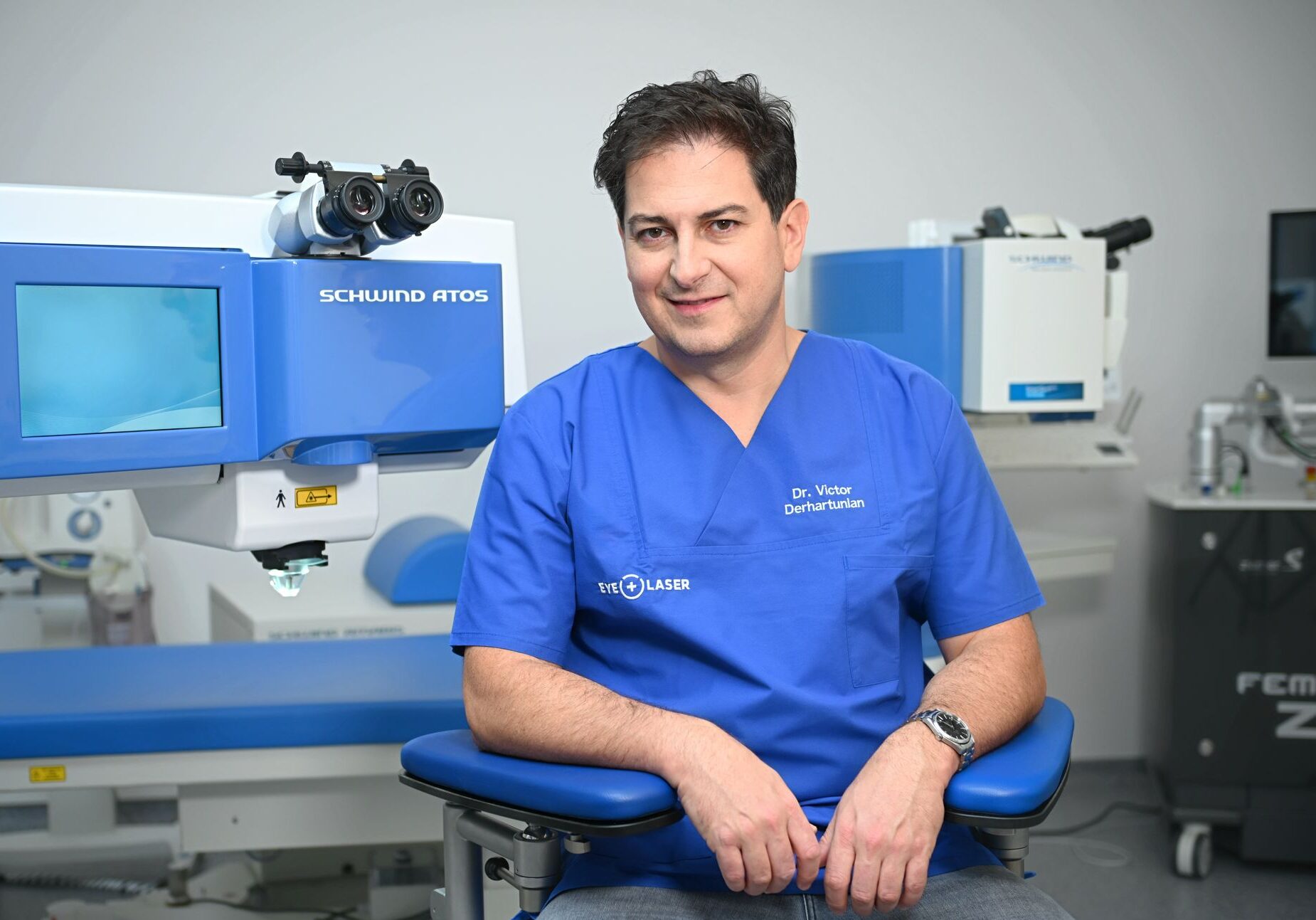
Dr. Victor Derhartunian

The decision to undergo laser eye treatment is often deeply emotional. Many of our patients from the Zurich region report a desire for more spontaneity and freedom in everyday life. At the same time, there are often uncertainties and fears: Is the procedure really safe? What if something goes wrong?

Dr. med. univ. Victor Derhartunian, FEBO, FWCRS, Medical Director and Surgeon at EyeLaser Zurich:

“I face these questions every day. My most important task is to build trust in a personal consultation and replace any uncertainty with well-founded facts. Many people in Zurich are extremely well informed and rightly expect precision and quality, and we align every step with this. The greatest joy for me is seeing patients’ emotional reaction the day after the procedure, when they see clearly for the first time without visual aids. This is more than a medical correction; it is a new chapter of life.”

Who is Femto-LASIK suitable for, and who is it not suitable for?

Ein Leben ohne Brille – Erfolgsgeschichten aus Zürich

🟢 Well suited: from 18 years of age, prescription stable for at least one year; short-sightedness, long-sightedness and astigmatism within the KRC recommendations and your corneal thickness; a wish to return to everyday life quickly.

🟡 Assessment needed: dry eyes, large pupils, a rather thin cornea; from about 45 we consider PresbyMAX, and with long-sightedness also lens replacement (otherwise from about 55).

🔴 Not suitable, but there is another route: contact sport or a profession with a risk of blows → SmartSight or Trans-PRK; cornea too thin → Trans-PRK, EASE or ICL lens; keratoconus → first crosslinking; pregnancy and breastfeeding → later.

Femto-LASIK, SmartSight, Trans-PRK or EASE?

Laser procedures at EyeLaser Zurich compared (prices per eye)
Feature Femto-LASIK SmartSight Trans-PRK EASE
Principle flap, excimer laser underneath lenticule inside the cornea ablation at the surface lentoid at the surface
Long-sightedness yes no no no
Thin cornea rather not depending on reserve yes yes
Contact sport rather not (flap) yes yes yes
Clear vision 1 to 2 days 1 to 2 days days to weeks days to weeks
Price per eye CHF 1’800 (wavefront-guided CHF 2’500) CHF 2’500 CHF 1’500 (wavefront-guided CHF 2’500) CHF 2’000

From about 45 years of age: PresbyMAX (CHF 3’300). If no laser procedure is suitable: ICL lens (CHF 4’500). In detail: Eye laser methods compared.

Check suitability (about 45 seconds)

Safety and transparency: honest information

Trifokallinsen

Femto-LASIK is one of the most thoroughly studied procedures in eye surgery. Nevertheless, no procedure is 100% risk-free. Responsible patient information is a matter of course for us. Possible, mostly temporary side effects may include:

  • Dry eyes: Normal in the first weeks after the procedure and easy to treat with eye drops.
  • Sensitivity to glare (glare/halos): Especially at night, light sources may initially appear with halos. This usually improves significantly within a few weeks or months.
  • Under- or overcorrection: In one study, 6.3 percent of eyes needed an enhancement (Randleman 2009); at EyeLaser Zurich it is included for up to ten years after the procedure, provided you attend the annual check-up with us.

Your Path to Visual Freedom: Check your Eligibility Now

The first step is the most important. In just 15 minutes, find out in a free and non-binding suitability check whether you are a candidate for laser eye treatment. Our experienced team in Zurich will take time for you and answer all your questions in a relaxed and professional atmosphere.

Online appointment
Overview

All procedures compared

On the overview page laser eye surgery in Zurich you find all procedures side by side, with the suitability traffic light, documented results, healing timeline, fixed prices and instalment examples.

Other procedures at EyeLaser: SmartSight · Trans-PRK · SMILE or SmartSight? · PresbyMAX · ICL lens

By refractive error: Short-sightedness · Long-sightedness · Astigmatism · Presbyopia · Keratoconus

Costs and financing: All prices · Health insurance · Treatment process · Testimonials

Frequently asked questions about Femto-LASIK

Here we answer the questions that most often concern our patients from the Zurich region.

What does Femto-LASIK cost in Zurich, and what is included?

At EyeLaser Zurich, Femto-LASIK costs CHF 1’800 per eye, wavefront-guided CHF 2’500. Included are the procedure by Dr. Derhartunian, the follow-up checks of the first three months and an enhancement for up to ten years with an annual check (CHF 180). The pre-examination (CHF 300) is credited; you receive medication and eye drops on prescription from the pharmacy.

Does health insurance cover Femto-LASIK?

Basic insurance (KVG) pays for Femto-LASIK only in justified exceptional cases, for example if there is a large difference between the two eyes, and only with cost approval before the procedure. Supplementary insurance policies contribute depending on the product, often CHF 500 to CHF 1’500. EyeLaser Zurich supports you with the application. More under laser eye surgery and health insurance.

How long will I be off work? Can I get a sick note?

Most of our patients with office jobs can return to work after 1–2 days. We recommend taking the day of treatment and the following day off. A sick note for an elective procedure is unusual, but we are happy to provide you with a confirmation.

When can I do sport again, especially skiing, hiking on the Uetliberg or swimming in Lake Zurich?

Sport without body contact such as jogging, cycling or fitness training is possible again after one week, after clearance at the check-up. Swimming in the lake or in an indoor pool and sauna after four weeks. Contact sport also after four weeks, with protective goggles; because the corneal flap permanently adheres less firmly than the surrounding tissue, we recommend them for ball and combat sports later on as well. Good sunglasses are important for skiing.

What is the difference between LASIK and Femto-LASIK?

In both, a thin corneal flap is lifted and the correction is made underneath with the excimer laser. In classic LASIK, a blade (microkeratome) cuts the flap; in Femto-LASIK, a femtosecond laser does. EyeLaser Zurich performs only Femto-LASIK, with the SCHWIND ATOS for the flap and the AMARIS 1050RS for the correction.

Is Femto-LASIK possible for long-sightedness?

Yes. At EyeLaser Zurich, Femto-LASIK also corrects long-sightedness; according to the KRC recommendations, the limit is usually +3 to +4 dioptres, depending on the cornea. Above that, the ICL lens (up to +10 dioptres) or lens replacement may be considered. SmartSight is not used for long-sightedness.

Femto-LASIK or SmartSight: which suits me better?

Both correct short-sightedness and astigmatism with similarly good results. SmartSight does not need a flap and is therefore suitable for contact sport and a tendency to dry eyes; Femto-LASIK also corrects long-sightedness and costs CHF 1’800 instead of CHF 2’500 per eye at EyeLaser Zurich. The pre-examination shows which method suits your cornea.

How long beforehand do I need to stop wearing contact lenses?

Before the pre-examination at EyeLaser Zurich, leave out soft contact lenses for one week and rigid lenses for four weeks (ortho-K lenses for three months), because they slightly deform the cornea and distort the measurement. You will receive the exact times with your appointment confirmation.

Sources
  1. Sandoval HP, Donnenfeld ED, Kohnen T et al. Modern laser in situ keratomileusis outcomes. J Cataract Refract Surg 2016;42:1224–1234. PMID 27531300
  2. Solomon KD, Fernández de Castro LE, Sandoval HP et al. LASIK world literature review: quality of life and patient satisfaction. Ophthalmology 2009;116:691–701. PMID 19344821
  3. Eydelman M, Hilmantel G, Tarver ME et al. Symptoms and Satisfaction of Patients in the PROWL Studies. JAMA Ophthalmol 2017;135:13–22. PMID 27893066
  4. Randleman JB, White AJ, Lynn MJ et al. Incidence, outcomes, and risk factors for retreatment after wavefront-optimized ablations with PRK and LASIK. J Refract Surg 2009;25:273–276. PMID 19370822
  5. Llovet F, de Rojas V, Interlandi E et al. Infectious keratitis in 204 586 LASIK procedures. Ophthalmology 2010;117:232–238. PMID 20006909
  6. Bohac M, Koncarevic M, Pasalic A et al. Incidence and Clinical Characteristics of Post LASIK Ectasia: A Review of over 30,000 LASIK Cases. Semin Ophthalmol 2018;33:869–877. PMID 30359155
  7. Moshirfar M, Tukan AN, Bundogji N et al. Ectasia After Corneal Refractive Surgery: A Systematic Review. Ophthalmol Ther 2021;10:753–776. PMID 34417707