Why choose a trifocal lens?

EDOF
  • One system for all distances: three clearly defined focal points for near, intermediate (e.g., computer screen), and distance.
  • Independence from glasses in everyday life: reading, laptop, cooking, navigation – without the compromises of varifocals.
  • Permanent solution: the implants are designed for a lifetime.
  • Gentle procedure: precise planning and micro-invasive, outpatient surgery.

How the trifocal lens works – vision at three distances

Trifokallinse
  • Near (≈ 40 cm): smartphone, book, labels.
  • Intermediate (≈ 60–80 cm): notebook, stovetop, conversations.
  • Distance (from ≈ 1 m): road, sports, landscape.

The optics distribute light intelligently across these areas; the brain adapts during the first few weeks (neuroadaptation), which successively optimizes contrast and night vision.

What makes EyeLaser Zurich special?

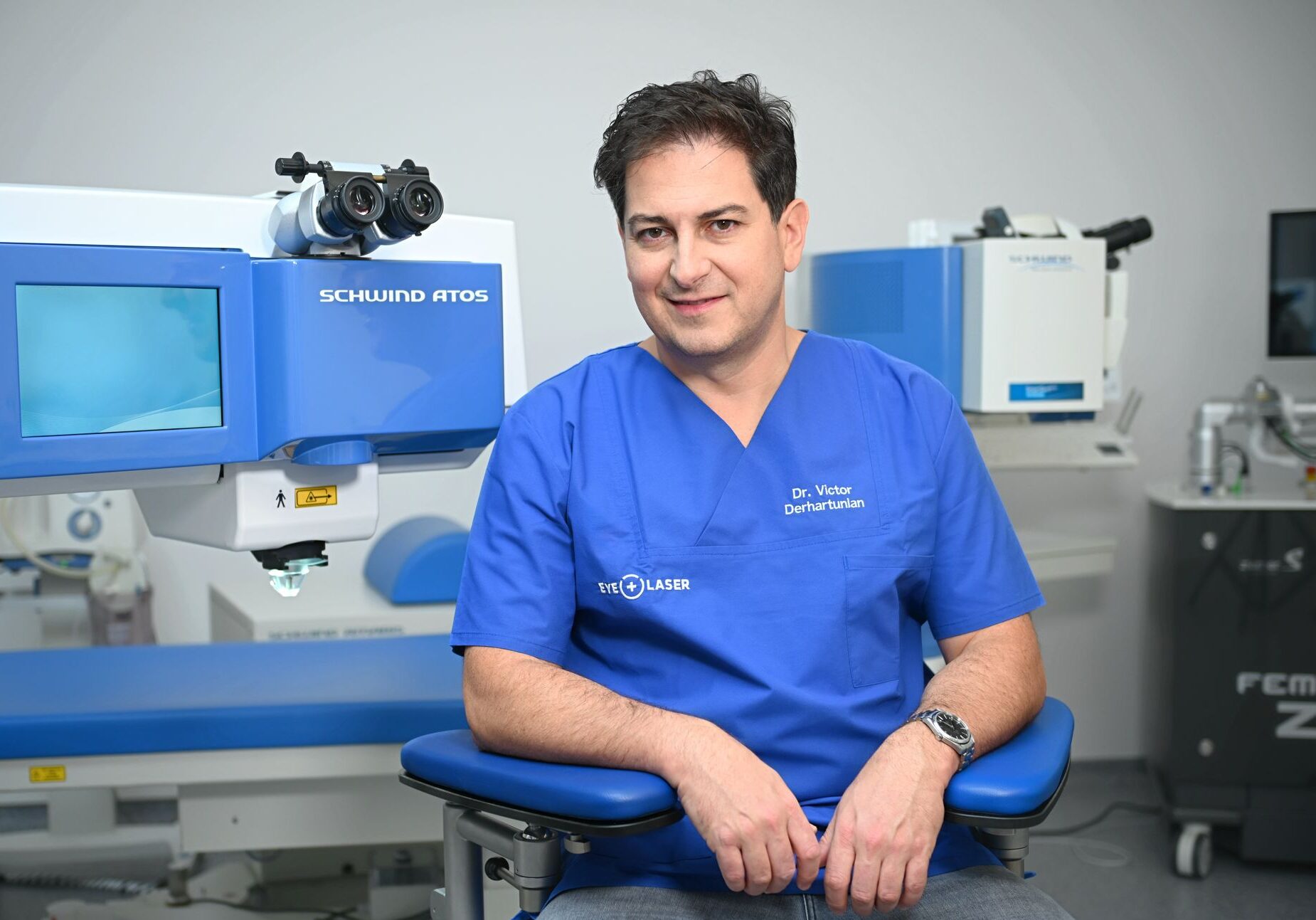
Dr. Victor Derhartunian
  • Surgeon-led: assessment, planning, and follow-up care are carried out personally and transparently – you know your point of contact.
  • High-end diagnostics & planning: comprehensive measurements as the basis for a tailor-made lens (including toric variants for astigmatism).
  • Location advantage: centrally located at Strehlgasse 33, 8001 Zurich – 5 min. from the Urania parking garage, near Bahnhofstrasse.

Comparison: Trifocal lens vs. varifocal glasses

Criterion Trifocal lens Varifocal glasses
Near / Intermediate / Distance All three distances covered Transitions, “swimming effects” possible
Handling Always with you, invisible Fog up, must be cleaned/carried
Activity Free for sports/outdoors Rain/sweat is disruptive
Night vision Halos possible initially, usually decreasing stable
Lifespan Permanent regular new purchases

Your journey at EyeLaser Zurich

Consultation & Suitability Check

Clarify expectations, vision profile, and medical requirements – including discussion of trifocal vs. EDOF vs. monofocal.

Precision Diagnostics

Topography, aberrometry, biometry – the basis for individual lens selection (including toric options).

Outpatient Procedure (≈ 15 Min/Eye)

Topical anesthesia, micro-invasive, structured process.

Aftercare & Fine-tuning

Check-ups in Zurich; rapid return to daily life.

Costs & Insurance (Switzerland)

Presbipia
  • Transparent quote in CHF: after diagnostics and lens selection; clear scope of services included. Aftercare.
  • Financing: installment model available upon request (subject to credit check).
  • Basic insurance: For refractive motivation, cost coverage is generally not provided; for medical indications (e.g., cataracts), legal requirements apply – we assist with the clarification.

Patient Testimonials

ICL

“Working on the laptop and reading in the evening – without glasses. The transition was short, the result lasting.”

“The personal support and the calm execution gave me confidence.”

Your First Step to Clear Vision

Imagine your everyday life without reading glasses: reading a menu, using your phone or seeing the mountains on the horizon—clear, comfortable and self-determined.

Book a non-binding consultation

FAQ – Detailed answers for Zurich (Trifocal lenses)

Am I suitable for trifocal lenses?


Suitable candidates are mostly individuals aged 45 and over with presbyopia and stable, healthy eye findings. During a suitability check, we examine the anatomy of the eye in detail (including the cornea, macula, tear film) and your personal vision goals in everyday life. Based on these results, we determine the right option for you (trifocal, EDOF, toric, or others).

How quickly will I see after the surgery?

Many patients experience clear, significant improvements in their vision at various distances as early as the following day. In the first few weeks after the procedure, neuroadaptation optimizes the interplay of contrast, depth of field, and potential night vision. Full visual stability is typically achieved after a few weeks.

Does the Procedure Hurt?

The procedure itself is largely painless, as anesthesia is administered exclusively via special eye drops. Brief, slight pressure or touch sensations are possible during the short procedure, but we do not expect any significant pain. The entire standardized process is closely monitored by our team.

Are halos/glare normal?

Yes, the occurrence of halos or glare is normal at first, especially at night, and is a result of the optical lens design. These phenomena usually decrease significantly over time through neuroadaptation. We discuss this phenomenon in detail beforehand, select the lens design to suit your individual vision profile, and closely monitor the entire adjustment phase.

Am I allowed to drive after the surgery?

You may drive again as soon as medical clearance is given after the follow-up check and you feel absolutely safe in traffic. In most cases, this is possible within a few days, although night driving is only recommended after vision has fully stabilized.

Sports, swimming, sauna – from when?

Light physical activity, such as walking, is often possible after just a few days. Swimming and sauna visits are generally allowed after about 2 weeks, or after medical clearance, to avoid infections. We assess contact sports or ball sports on an individual basis.

How long does the lens last?

Intraocular lenses, including trifocal lenses, are designed for lifelong use and do not need to be replaced. Since the natural, aging lens is replaced during this procedure, these implants prevent the later development of cataracts.

Will I still need glasses later?

The goal is extensive freedom from glasses in everyday life at all distances (near, intermediate, far). For very demanding specialized tasks, such as reading extremely fine print in low light, a light reading aid may nevertheless be useful. We discuss your expectations and realistic scenarios before the procedure.

Which lenses do you use?

We exclusively use premium implants from leading and established manufacturers with many years of experience in eye surgery. In the case of concurrent astigmatism (corneal curvature), we choose toric variants of the lenses. The decisive factor for the final selection is a precise measurement of your biometry and a consideration of your priorities (e.g., best near vision vs. highest night comfort).

What does the treatment cost in Zurich?

After detailed diagnostics, you will receive a clear and transparent quote in Swiss Francs (CHF), which covers all costs. The total amount depends primarily on the chosen lens type (e.g., toric or trifocal) and your individual eye parameters. We also offer the option of payment in installments.

Will my insurance cover the costs?

In the case of refractive motivation (desire for freedom from glasses), basic insurance usually does not cover the costs. If, on the other hand, there is a medical indication (such as cataracts), this is assessed according to the legal requirements of Switzerland. We actively support you in the necessary clarification of cost coverage.

How is the follow-up care organized?

Follow-up care is structured and standardized with fixed appointments (e.g., day 1, week X, month X) planned directly at our location in Zurich. In addition, you will receive a direct contact option for acute questions or uncertainties, so you are never left alone.

What happens if a small residual correction remains?

Should small residual values remain after the operation, these can – depending on the condition of the cornea and the overall findings – be fine-tuned (e.g., by means of a laser touch-up). Our treatment planning is fundamentally conservative and always prioritizes the long-term safety and stability of the eye.

Trifocal or EDOF – which is right for me?

The trifocal lens offers you maximum visual acuity at close range (e.g., smartphone), which ensures a very high degree of freedom in everyday life. The EDOF lens (Extended Depth of Focus) offers an extended depth of field with a tendency for fewer halos, but may require additional reading glasses for the smallest print in low light. We simulate your everyday scenarios during a personal consultation.

How Do I Make an Appointment?

You can schedule an appointment for an initial consultation easily and conveniently online or by phone through our office. This non-binding initial consultation serves to clarify suitability in detail, define your personal vision goals, and select the right lens optics for you.