What are EDOF Lenses – and how Do They Work?

EDOF

EDOF stands for Extended Depth of Focus (erweiterte Tiefenschärfe). Statt mehrerer fixer Brennpunkte (Multifokal/Trifokal) erzeugen EDOF-Linsen einen continuous range of focus from distance to intermediate distance (≈ 60–90 cm).
Your advantage: a very natural visual impression, comfortable night vision and stable computer vision – ideal for everyday life, work, and mobility.

Note: like a modern autofocus that keeps not just one point, but an entire area in focus.

Who are EDOF Lenses Suitable for?

EDOF-Linsen

EDOF is particularly beneficial if you…

  • work a lot on your laptop/PC/tablet,
  • drive (even at night) and prioritize contrast/night vision comfort,
  • lead an active life (sports/outdoor) and want clear distance & intermediate vision,
  • are sensitive to glare and want to minimize optical side effects,
  • accept that for very small print at close range, a fine reading aid may occasionally be useful.

During the suitability assessment, we check the cornea, macula, tear film, pupil, and visual habits and individually select EDOF vs. alternatives (incl. toric variants for astigmatism).

EDOF vs. Trifocal vs. Monofocal

Comparison: EDOF · Trifocal · Monofocal
Criterion EDOF Trifocal Monofocal
Near good–very good (everyday, menus, labels); small print may require reading glasses very strong (mostly full near vision independence) Reading glasses needed
Intermediate (60–80 cm) very strong (PC, kitchen, conversation) very strong medium
Distance very good very good very good
Halos/Glare generally fewer possible initially, usually subside minimal
Visual Impression very natural, wide depth of focus 3 defined distances one distance
Spectacle Independence high in everyday life; near small print may require glasses very high at all distances low

Why EyeLaser Zurich?

Phake ICL-Linse
  • Surgeon-led: suitability check, lens selection, and aftercare personally & transparently – clear points of contact.
  • High-end diagnostics: topography, aberrometry, biometry → customized EDOF solution (incl. toric for astigmatism).
  • Location advantage: central, easily accessible, Urania parking garage within walking distance; free initial consultation possible.

Process – your Path to EDOF Lenses

Consultation & Suitability Check

Visual Profile (PC, Night Driving, Sports), Goals, Medical Conditions

Precision Diagnostics

Exact biometry & imaging quality → Decision EDOF vs. alternatives and toric yes/no

Outpatient Procedure (≈ 15 Min/Eye)

Topical Anesthesia, Micro-invasive Lens Exchange, Structured, Calm Process

Aftercare & Fine-tuning

Check-ups in Zurich; Rapid Return to Everyday Life/Work; Fine-tuning Possible (e.g., Laser Touch-up)

Results & Safety (Safety Box)

ICL-Linsenimplantation
  • Rapid functional recovery – often clear improvement on the following day.
  • Neuroadaptation optimizes contrast/night vision in the first few weeks.
  • Residual refractive error: depending on the cornea, fine-tuning is possible (conservatively indicated).
  • Standardized surgical protocols, validated hygiene, clear emergency contact channels.

What does an EDOF lens cost?

ICL

The price depends not on the lens but on your situation. Three cases, three clear answers.

Cataract with basic insurance: We bill the operation to your basic insurance under the TARDOC tariff. For an EDOF or multifocal lens you pay a surcharge of CHF 2,700 per eye, plus CHF 1,000 with the femtosecond laser. All cataract surcharges

Lens exchange without cataract: Refractive lens exchange without cataract costs CHF 5,000 per eye, CHF 6,000 with the femtosecond laser — regardless of which implant is used. Refractive lens exchange

Cataract as a self-payer: Without Swiss basic insurance, cataract surgery is priced like lens exchange: CHF 5,000 per eye, CHF 6,000 with the femtosecond laser.

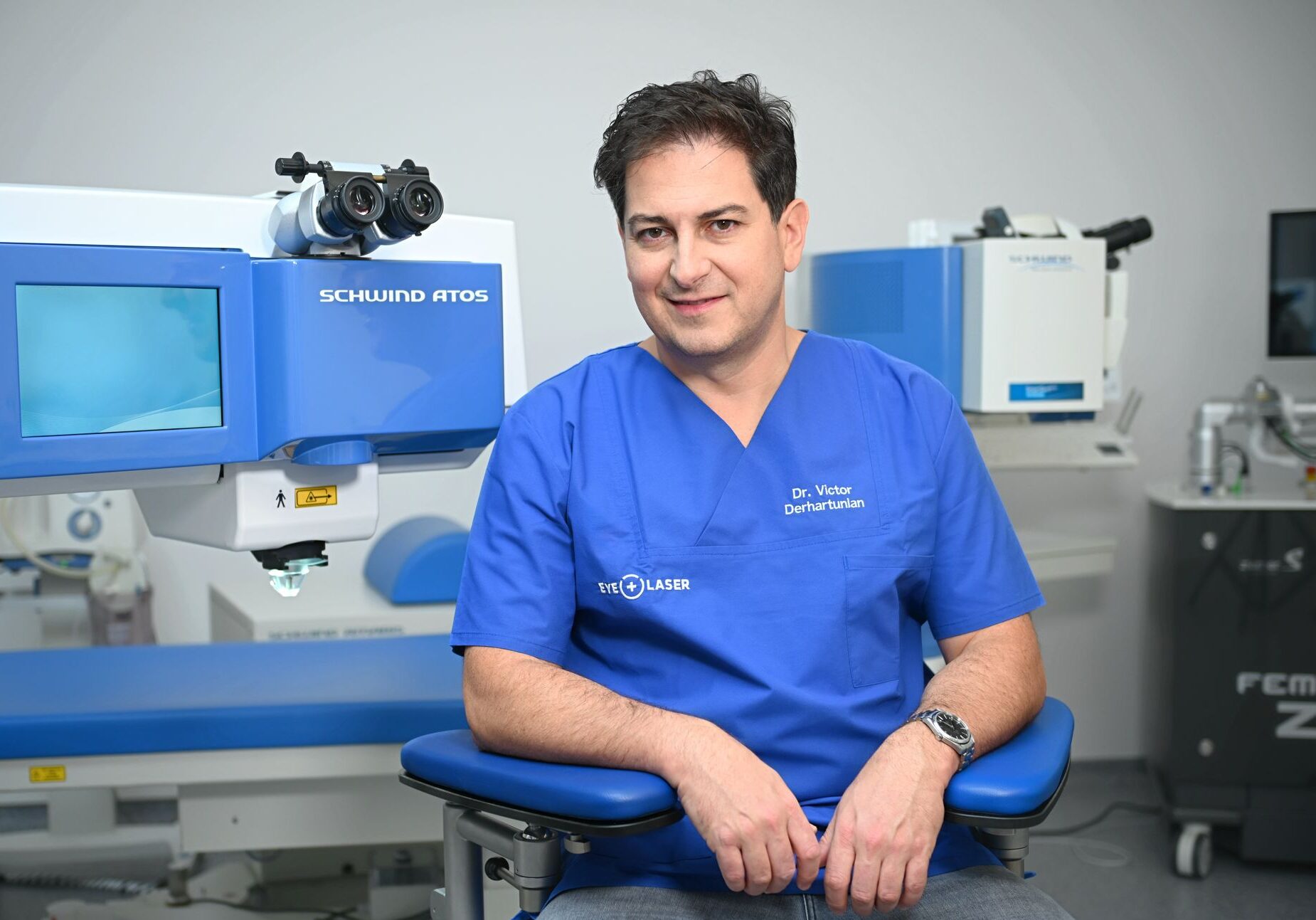
A Word from Dr. Derhartunian

Dr. Victor Derhartunian

EDOF technology closes the gap between monofocal and trifocal lenses. Those who prioritize visual quality and night driving comfort and want to avoid glasses in everyday life – especially when working on a PC – often make the best choice with EDOF.”

Patient Testimonials

“Relaxed at the screen, clear in the distance – exactly what I was looking for.”
“Quiet at night, sharp everywhere during the day. For very small print, I use fine reading glasses – it doesn’t bother me.”

Are you ready for the decisive step?

Tell your reading glasses Farewell. The first step is a simple, non-binding suitability analysis at our clinic in Zurich.

Find out whether you can see your life in focus again with your own eyes.

book an assessment

FAQ – EDOF in Zurich (15 Detailed Answers)

Am I Suitable for EDOF?

Usually yes for presbyopia and a focus on intermediate distances (PC, Küche, Gespräch). We examine the cornea, macula, tear film, pupil, and visual goals. With Astigmatism can be corrected with toric EDOF lenses; for macular or corneal issues, we advise on alternatives.


Will I See Completely without Glasses with EDOF?

In everyday life häufig ja: PC, Autofahren, Einkauf, TV. Für Very small print at close range – especially in low light – some people use fine reading glasses. We discuss this openly.

EDOF or Trifocal – which is Right for Me?

EDOF: broad depth of field, tends to have fewer halos, strong PC range, very natural impression.
Trifocal: maximum freedom from glasses inkl. Nah-Kleinstschrift; anfangs halos möglich, meist rückläufig. Decision based on visual habits & priorities.

What does a EDOF lens cost — for cataract and for lens exchange?

It depends on your situation, not on the lens. With a medically indicated cataract and basic insurance, the operation is billed under the TARDOC tariff; you pay the surcharge for the lens — CHF 2,700 per eye for EDOF and multifocal lenses, plus CHF 1,000 with the femtosecond laser. Refractive lens exchange without cataract costs CHF 5,000 per eye, CHF 6,000 with the femtosecond laser, regardless of the implant. Without Swiss basic insurance, lens-exchange prices apply to cataract surgery as well.

Does the Procedure Hurt?

Outpatient under topical anesthesia – Pain is not expected. Brief pressure/touch sensations are normal. The procedure is standardized and explained step by step.

Are Halos/Glare Possible with EDOF?

Yes, possible – tends to be rarer/less frequent als bei klassischen Multifokal-Designs. Appropriate lens design, expectation management, and aftercare support the adjustment period.

How is Vision on Screens?

A core strength of EDOF: the intermediate range (≈ 60–80 cm) is stable and comfortable. Viele berichten von natural, relaxed screen vision.

Can I Play Sports?

Light activity usually after a few days. Swimming/sauna typically after ≈ 2 weeks (ärztliche Freigabe). Contact/ball sports on an individual basis.

How Long Does an EDOF Lens Last?

For lifelong use ausgelegt. Da die natürliche Linse ersetzt ist, kann später no cataracts can develop later.

Do I Need Follow-up Appointments?

Yes – structured plan (z. B. Tag 1, Woche X, Monat X) in Zürich. If you have any questions, you can reach us directly.

What if Residual Refractive Error Remains?

Depending on the cornea/overall situation, fine-tuning are possible (e.g. laser touch-up). We plan conservatively and prioritize safety.

Are there Toric EDOF Lenses?

Yes. Bei Hornhautverkrümmung stehen toric EDOF designs are available. Selection based on biometry, axis, and stability.

Which Manufacturers Do You Use?

We work with premium implants from leading manufacturers and select the design based on your visual profile (near, night comfort, screen).

Does Basic Insurance Cover Costs?

It depends on your situation, not on the lens. With a medically indicated cataract and basic insurance, the operation is billed under the TARDOC tariff; you pay the surcharge for the lens — CHF 2,700 per eye for EDOF and multifocal lenses, plus CHF 1,000 with the femtosecond laser. Refractive lens exchange without cataract costs CHF 5,000 per eye, CHF 6,000 with the femtosecond laser, regardless of the implant. Without Swiss basic insurance, lens-exchange prices apply to cataract surgery as well.

How Do I Make an Appointment?

Online or by phone. The Initial consultation is non-binding – we clarify suitability, goals, and the best lens option (EDOF, trifocal, monofocal, toric). Free initial consultation is possible.