

The cornea is the transparent window of the eye. Its outermost layer, the epithelium, is about 50 micrometres thin and regrows within days after any injury. Beneath it lies the corneal tissue proper, the stroma.
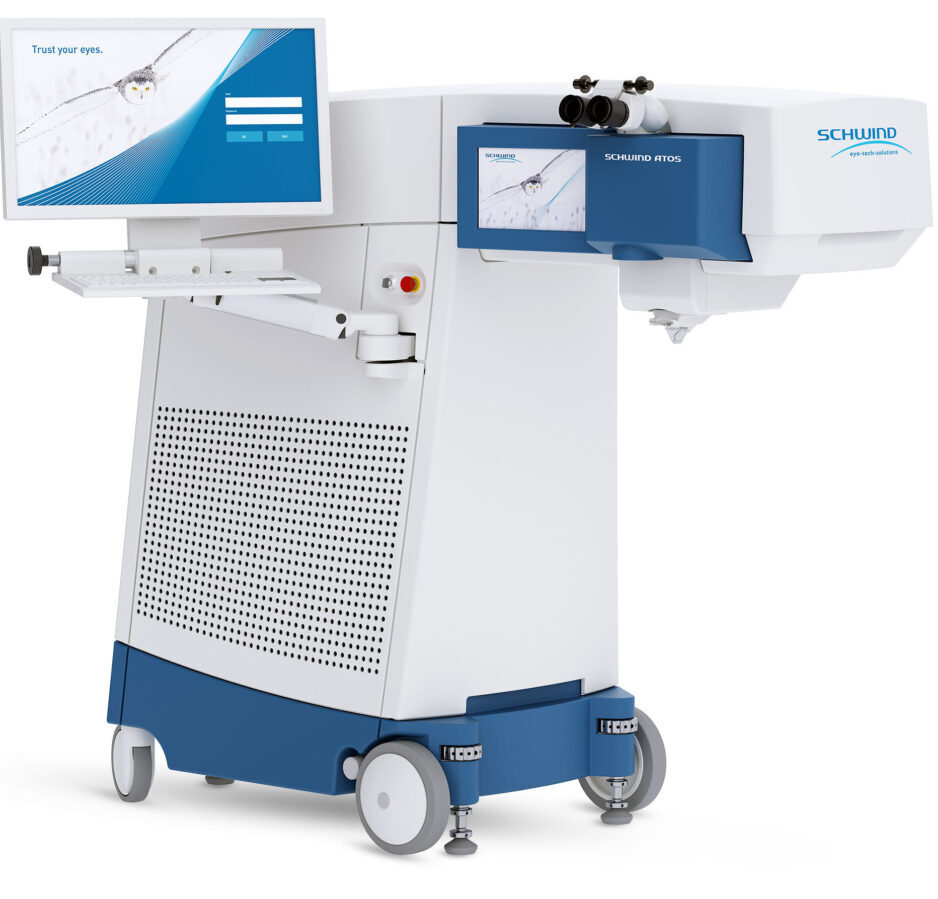
Classic surface methods such as PRK and Trans-PRK remove the epithelium and reshape the stroma with an excimer laser, which vaporises tissue layer by layer with ultraviolet light. EASE works differently: the femtosecond laser sends infrared pulses through the intact epithelium and creates microscopic bubbles in the tissue that separate it along a programmed surface. This produces a lentoid, a thin lens-shaped piece of tissue whose shape matches your refractive error.
The surgeon lifts the lentoid off together with the epithelium above it in one piece, with no blade and no vaporisation. The corneal surface now has its new shape, and the epithelium regrows over it within days. There is no flap that could shift and no pocket in the cornea, because the whole procedure takes place on the surface.
So EASE differs from Trans-PRK in that tissue is cut and removed whole rather than vaporised. Both are flap-free surface methods and both suit thin corneas. They differ in physics, in the amount of energy that reaches the tissue and in the length of clinical experience: Trans-PRK for more than ten years, EASE since 2025.