Refractive Errors We Correct Technologically

To understand how our technology works, we must know what it repairs. We treat the following visual impairments through targeted tissue ablation or lens implantation:

Eyelaser Zürich
  • Myopia (Nearsightedness): The eye is built too long. Our excimer laser flattens the cornea in the center with micrometer precision so that the light rays focus exactly on the retina again.
  • Hyperopia (Farsightedness): The eye is too short. The laser steepens the cornea in a ring shape to increase the refractive power.
  • Astigmatism (Corneal Curvature): An asymmetric cornea. The SCHWIND laser compensates for the curvature, with cyclotorsion compensation (eye rotation when lying down) ensuring perfect results.
  • Presbyopia (Age-Related Farsightedness): The lens muscle relaxes. Here we use modern femtosecond lasers for precise refractive lens exchange (use of premium lenses).

The Traffic Light System: Is Our Technology Suitable for You?

We receive patients from Zurich, Winterthur, Zug, Basel, and the surrounding 150-km area. Before we activate our lasers, we rigorously assess your suitability.

EyeLaser Zurich

🟢 Green Light (Ideal Laser Conditions):
You are 18 to 50 years old, your diopter values have been stable for one year, and topographic measurement shows a healthy, sufficiently thick cornea. You are perfectly suited for SmartSight or FemtoLASIK.

🟡 Yellow Light (Specialized Technology Required):
Your cornea is very thin or you suffer from dry eyes. Our technological solution: We use touch-free, surface TransPRK (SmartSurface) or implant ultra-thin EVO Visian ICL lenses.

🔴 Red Light (No Laser Treatment Possible):
You have unstable keratoconus, severe diabetes, or are pregnant. Our Promise: Technology is only as good as the doctor who uses it. If a procedure is not safe, we do not perform it.

Technological Treatment Comparison

Method / Technology System Used Suitability Surgical Experience Healing Duration Special Feature
SmartSight SCHWIND ATOS (Femto) Myopia, astigmatism Minimally invasive, no flap Very fast (24h) Latest generation of lenticule extraction with eye tracking
FemtoLASIK Ziemer FEMTO LDV & SCHWIND Amaris Myopia, hyperopia, astigmatism Painless, 2-laser steps Very fast (24h) The global gold standard, extremely high precision
TransPRK SCHWIND Amaris 1050RS Thin cornea, athletes 100% touch-free, only 1 laser Medium (3-5 days) No contact with the eye, no incision required
ICL Lenses EVO Visian Lenses High diopters (up to -18 dpt) Minimal incision, fast Fast (1-2 days) Reversible, for unsuitable cornea

Your Journey to Perfect Vision: Timeline & Guidelines

The precision of our diagnostic equipment requires your cooperation.

Ein Leben ohne Brille – Erfolgsgeschichten aus Zürich

Preparation:

  1. Contact Lens Break: Hard lenses must be discontinued 3 weeks, soft lenses at least 1 week before the preliminary examination.
  2. On the Day of Surgery: Absolute prohibition of perfume, hairspray, or makeup. The fumes interfere with the laser’s microclimate sensors. Bring an accompanying person with you.

Healing After Laser Treatment (FemtoLASIK / SmartSight):

  • Day of Surgery: The laser is only active for a few seconds. Afterwards, vision is cloudy. You rest at home.
  • After 24 hours: Vision is usually already crystal clear. Screen work and driving (after medical approval) are possible again.
  • After 7 days: Jogging and light makeup are permitted again.
  • After 1 month: Swimming, sauna, and contact sports can be resumed without concern.

Swiss Excellence Meets German Engineering

When it comes to your eyes, there is no room for compromise. The fear of the procedure disappears once you understand how our technology protects you.

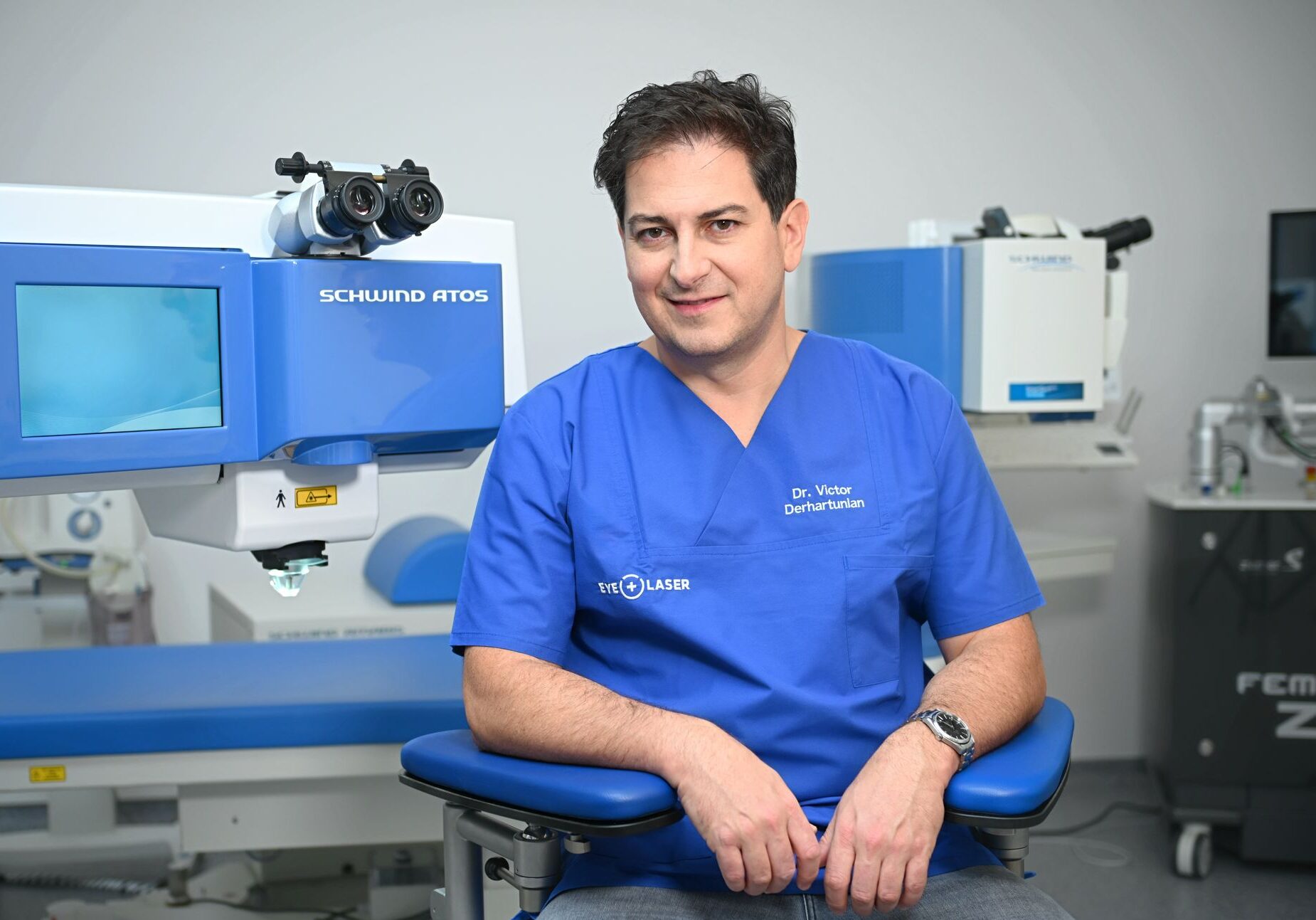
Dr. Victor Derhartunian

“An excellent surgeon can only achieve mediocre results with mediocre instruments. That is why I have selected exclusively the world’s best laser systems for EyeLaser Zurich. The combination of the SCHWIND Amaris and the SCHWIND ATOS gives me as a physician the confidence to treat your refractive error with a precision that would be humanly impossible manually.”
— Dr. Victor Derhartunian, FEBO, Lead Eye Surgeon EyeLaser Zurich

Our High-End Systems in Detail

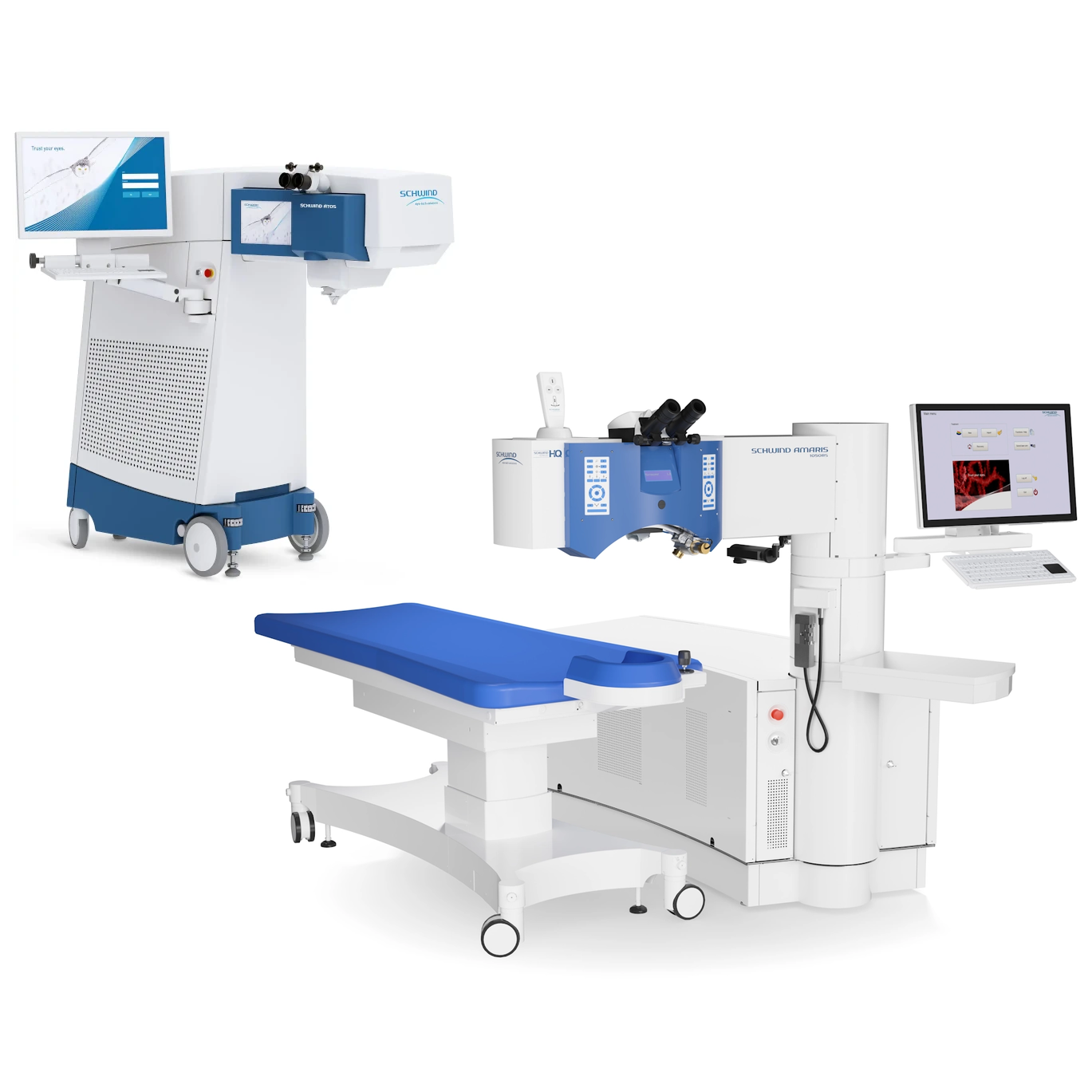
SCHWIND ATOS & SCHWIND AMARIS
  • SCHWIND Amaris 1050RS: A masterpiece. With 1,050 laser pulses per second, it is one of the fastest excimer lasers in the world. Its 7D eye tracker anticipates eye movements before they occur (latency-free technology).
  • SCHWIND ATOS: Our premium femtosecond laser for the SmartSight procedure. It is the first system in its class to offer automatic cyclotorsion control for minimally invasive procedures.
  • Ziemer FEMTO LDV Z8: Swiss cutting-edge technology. This mobile low-energy femtosecond laser enables highly precise, extremely tissue-sparing cuts for FemtoLASIK and laser cataract surgery.

Technological Safety and Medical Transparency According to MedBG

Ein Leben ohne Brille – Erfolgsgeschichten aus Zürich

As an ethically operating Swiss eye clinic, we do not promise you 100% healing guarantees, because every biological organism reacts uniquely. However, we guarantee you the use of technology that is suitable for maximum predictability and maximum risk minimization.

Every procedure carries risks, such as temporarily dry eyes or nighttime halos during the healing phase. Through the extremely fine ablation profiles of our SCHWIND lasers (which leave tissue smoother than older models) and the minimally invasive SmartSight technique, we reduce these side effects to an absolute minimum. We inform you honestly and transparently about your individual chances of success before each procedure.

FAQ: Everything About Our Laser Eye Surgery Technology in Zurich

What does treatment with the most modern laser technology cost?

Quality has its price, but it is affordable. Touch-free TransPRK starts at approximately CHF 1,500 per eye. The premium procedures SmartSight and FemtoLASIK with our most modern femtosecond lasers are slightly higher due to the high technology costs. You receive a guaranteed fixed price.

Do you offer installment payments?

Yes. High-end medicine should not be a privilege. We offer customized installment payment plans so you can finance your visual freedom conveniently in monthly installments.

What is included in the treatment costs?

The fixed price covers the entire operation, use of the SCHWIND/Ziemer laser systems, all medical consumables and medications for the first days, as well as routine follow-up examinations.

Does Swiss health insurance cover laser treatment?

Basic insurance (KVG) does not cover the costs of laser treatments. However, some supplementary insurance policies (VVG) contribute to refractive surgery. Please clarify this with your insurance provider.

What is the SCHWIND Amaris 1050RS?

It is the flagship among excimer lasers. It operates at a frequency of 1,050 Hertz and ablates one diopter in less than 1.3 seconds. This means extremely short treatment times and less corneal drying.

What exactly does "7D eye tracking" mean?

The system monitors your eye in 7 dimensions (X, Y, Z axes, roll, pitch, yaw, and time). It predicts where your eye will be in the next millisecond and positions the laser beam exactly there.

What is the difference between SmartSight and SMILE?

Both are lenticule extraction procedures. However, SmartSight (with the SCHWIND ATOS) is the more modern generation. It features integrated pupil recognition and cyclotorsion compensation (rotation of the eye when lying down)—for even more precise results, especially with astigmatism.

Why do you use laser devices from Ziemer?

Ziemer is a Swiss manufacturer known for its revolutionary low-energy femtosecond lasers (FEMTO LDV). These lasers cut extremely gently and maximally preserve surrounding tissue, which accelerates healing.

What happens if I sneeze or cough during treatment?

No panic. The eye tracker reacts in milliseconds. If you cough strongly and your head moves, the laser automatically stops immediately without endangering the eye.

What happens during a power outage during surgery?

Our clinic is equipped with an uninterruptible power supply (UPS/battery backup). Even in the event of a complete blackout in Zurich, we can safely and calmly complete the operation.

Do I feel pain from the laser's energy?

No. We use “cold light lasers” (excimer) that do not burn tissue but photoablatively vaporize it. No heat is generated on the eye. The eye is also completely anesthetized with drops.

How long does the device laser per eye?

The pure laser time for tissue ablation with modern systems is often only 10 to 30 seconds per eye, depending on your diopter number.

Can laser technology make me blind?

In modern refractive surgery, the risk of blindness is extremely low and practically excluded. The laser works only on the superficial cornea and does not penetrate the eye. The optic nerve remains untouched.

Does laser treatment cause permanently dry eyes?

Temporarily dry eyes after surgery are normal. Through minimally invasive technologies such as SmartSight, where hardly any corneal nerves are severed, the risk of permanent dryness is drastically reduced.

Does the latest technology alleviate problems with night vision (halos)?

Yes. Earlier laser generations often created small treatment zones. Our modern lasers offer large, aspheric ablation profiles (“wavefront-optimized”) that minimize or even improve disturbing light effects in the dark.

What is a "touch-free" treatment?

With TransPRK (SmartSurface), no surgical instrument touches your eye. The laser gently removes the outermost regenerative layer (epithelium) and corrects the refractive error in a single, touch-free step.

Is there a re-treatment if the result is not perfect?

The predictability of our systems is enormously high. Should a residual refractive error remain, a medically indicated re-treatment within a defined guarantee period (usually 1 year) is included.

Up to what age can I have laser treatment?

Pure laser treatment of the cornea is often sensible up to approximately age 50. After that, presbyopia begins, for which we technologically switch to laser-assisted lens exchange.

Can your technology laser away presbyopia?

Presbyopia originates from the lens, not the cornea. Therefore, refractive lens exchange with premium lenses is the technologically most sustainable solution. The laser only assists with the precision of the incisions.

What are EVO Visian ICL lenses?

ICL are high-tech lenses made of biocompatible Collamer that are permanently inserted into the eye (in addition to your own lens). They correct extreme refractive errors for which the laser is not approved.

Why is topography so important before laser treatment?

The topography device creates a 3D map of your eye with thousands of measurement points. This precise data is digitally transmitted to the laser, which then creates an individual ablation profile—like a fingerprint—for your eye.

Are the lasers safe if I have astigmatism?

Absolutely. The SCHWIND Amaris and the ATOS laser are specialists for astigmatism. The integrated cyclotorsion compensation detects how your eye rotates when you change from sitting to lying position and lasers exactly in the correct axis.

Will my driver's license be changed after laser surgery?

Yes. After we confirm full visual acuity at the follow-up examination, you receive a medical certificate with which you can have the “glasses/visual aid” entry removed from your driver’s license at the road traffic office.

How sterile is the laser operating room?

Our operating room in Zurich meets the highest clinical hygiene and sterility standards (Class 1). Continuous air filtration and strict protocols guarantee you maximum protection against infections.

How quickly can I get an appointment for the technology check?

We offer non-binding initial examinations at short notice. Call us or book online to find out in a few days which high-tech solution is ideal for your eyes.