In brief

The ICL lens in Zürich — the key facts at a glance

The ICL (phakic lens, implantable contact lens) is an additional lens that sits between the iris and your natural lens and corrects short-sightedness up to −25 dpt, long-sightedness up to +10 dpt and astigmatism up to 6 dpt. At EyeLaser Zurich it costs CHF 4’500 per eye. The cornea remains untouched, and the lens can be removed again.

✓Duration: around 20 minutes per eye, outpatient, only eye drops for anaesthesia.
✓Range: short-sightedness up to −25 dioptres (lens power), long-sightedness up to +10 dioptres, astigmatism up to 6 dioptres (toric lens). We work with lenses from STAAR Surgical (EVO ICL) and Biotech (Eyecryl Phakic).
✓Reversible: the lens can be removed or exchanged, the cornea remains unchanged.
✓Price: CHF 4’500 per eye across the entire range, including lens, procedure and follow-up examinations in the first three months; medication separately on prescription.
✓Who operates: depending on the case, Dr. Derhartunian or Dr. Kynigopoulos, under the medical direction of Dr. Derhartunian.
✓To bear in mind: lifelong annual check-up of intraocular pressure, distance to your natural lens and corneal cell count.

25’000

refractive procedures – personally performed by Dr. Victor Derhartunian

8

Contributions at the ESCRS Congress 2026 – to the research page

1 year

Laser fine-tuning after the ICL included in the first year

Fixed price

per procedure – follow-up examinations in the first three months included

25’000refractive procedures performed personally by Dr Derhartunian
CHF 4’500fixed price per eye, including lens and three months of follow-up
4,9 / 5from 118 Google reviewsAs of September 2026
Kreis 1Strehlgasse 33, two minutes on foot from Paradeplatz

Seeing without glasses – an equivalent alternative to laser eye surgery

Imagine waking up in the morning in Zürich and seeing the world clearly straight away – without glasses or contact lenses. For many people, laser eye surgery such as Femto-LASIK or SmartSight is the way into this new life. The ICL is a second, equivalent route – and for some eyes the more suitable one.

With the implantable contact lens (ICL) we offer at EyeLaser Zurich a safe complement to the laser: according to the recommendations of the KRC (2022), it is possible from as little as around −1 or +1 dioptre. It is particularly useful for very high refractive errors, a thin cornea or dry eyes. 98 % of patients would choose the ICL again.

Prices & services

Price & services at a glance

Transparent, binding and without hidden costs — as befits Swiss medicine.

FIXED PRICE

Phakic lenses (ICL) in Zürich
CHF 4’500 per eye
Vision correction without removing corneal tissue — reversible.
Included in the fixed price
✓AI-assisted ICL sizing — determination of lens size by OCT (Anterion & MS-39) with AI-assisted formulas
✓Fixed price — no surcharges after the pre-examination
✓Laser fine-tuning included — if a bothersome residual refractive error remains in the first year after the ICL, Dr. Derhartunian corrects it with the laser at no additional cost
✓Emergency availability after the procedure — your surgeon can be reached around the clock during the first 24 hours
✓Pre-examination CHF 300 — credited towards the cost if you go ahead with treatment
✓Payment by instalments — six months interest-free directly with us (CHF 750 per month and eye); longer terms through HeyLight with a credit check and interest
✓Separate — prescription medication and eye drops (pharmacy); after the first three months, the annual check-up for CHF 180, recommended for life after an ICL
Dr. med. univ. Victor Derhartunian“We recommend the method that suits your eyes — not the one that happens to be available. That is why we have the established laser and lens procedures in-house and only decide after the comprehensive pre-examination.”
— Dr. med. univ. Victor Derhartunian, FEBO, FWCRS
Results

What research shows about the ICL

For the ICL, there is a meta-analysis covering 2’204 eyes, the American approval study on the current EVO generation and long-term data over eight years.

80.2 %

achieved 20/20 or better without correction

meta-analysis of 27 prospective studies, 2’204 eyes, ICL V4c and V5, mean follow-up 14 months. Larivoir et al. 2025, PubMed 41369665

99,7 %

saw 20/40 or better without glasses — the threshold for driving

Approval study on the EVO ICL, 619 eyes, six months. Packer 2022, PubMed 35645557 (author advises the manufacturer)

90.5 %

were within ±0.5 dioptres of the target correction

same study, 629 eyes included, six months

83 %

were within ±0.5 dioptres after eight years

EVO ICL, 177 eyes, Kamiya et al. 2021, PubMed 34977099

3.8 %

loss of corneal endothelial cells after about 21 months

meta-analysis of 18 studies on the ICL V4c. Kisiel and Gurumurthy 2024, PubMed 38194352

These figures come from published studies and are not our own data. Study populations differ in baseline values, time of measurement and definition of the outcome, so the figures are not directly comparable with one another. What is realistic for your eye, we tell you after the pre-examination.

What is an ICL lens (phakic lens, implantable contact lens)?

EVO ICL made of Collamer: the KS-AquaPORT opening in the centre, four small feet (haptics) and how the lens is rolled up so that it fits into the eye through an incision of about 3 mm. Visualisation: STAAR Surgical.

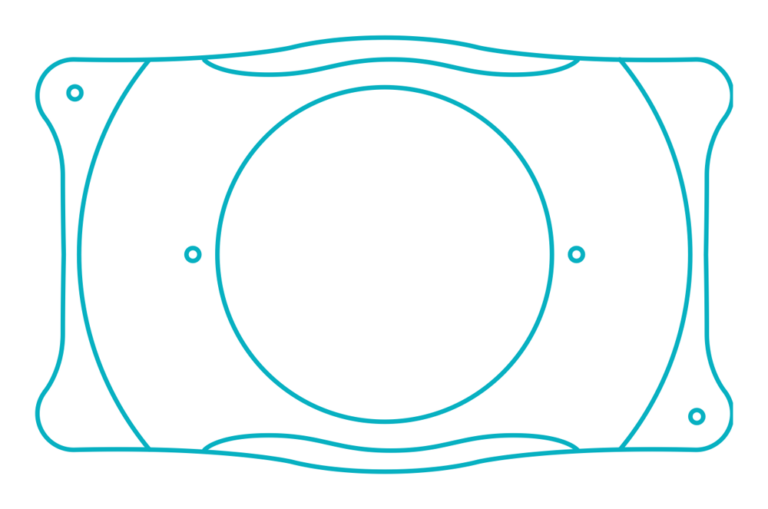
Line drawing of an older ICL generation: round optic without an opening in the centre

Older ICL generation: no central hole – an iridotomy was needed before surgery (a small laser opening in the iris)

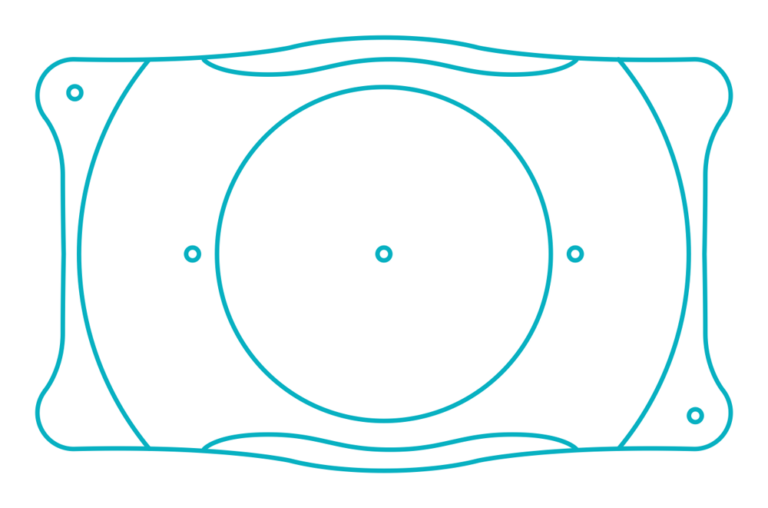
Line drawing of the EVO ICL: small KS-AquaPORT opening in the centre of the optic

EVO ICL: KS-AquaPORT opening (0.36 mm) in the centre – the aqueous humour circulates without an iridotomy

Same design, one difference: the opening in the centre of the lens. Drawings: STAAR Surgical.

This is how the aqueous humour flows through the central KS-AquaPORT opening of the EVO ICL: the natural circulation in the eye is preserved and no iridotomy is needed. Animation: STAAR Surgical.
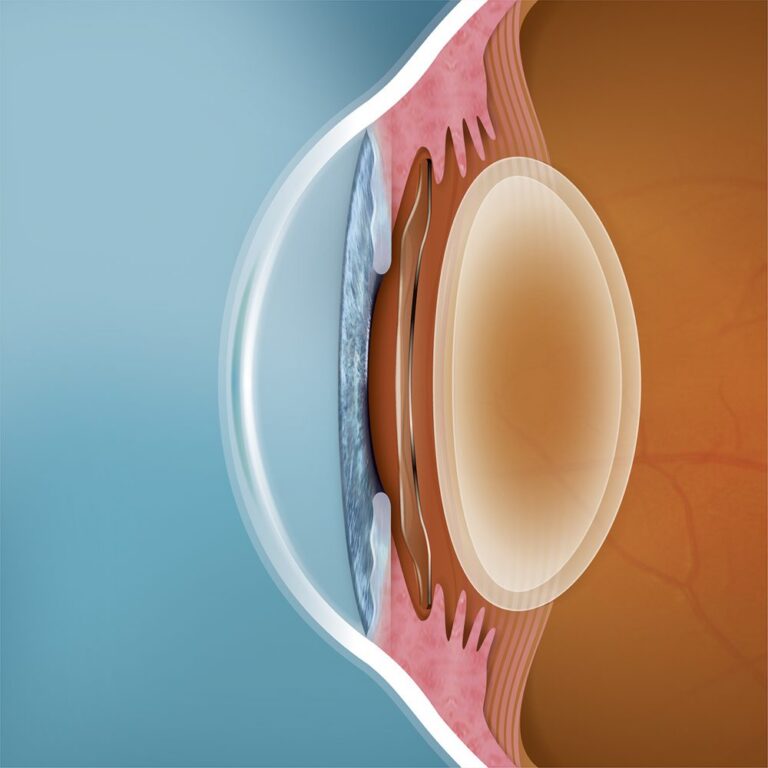
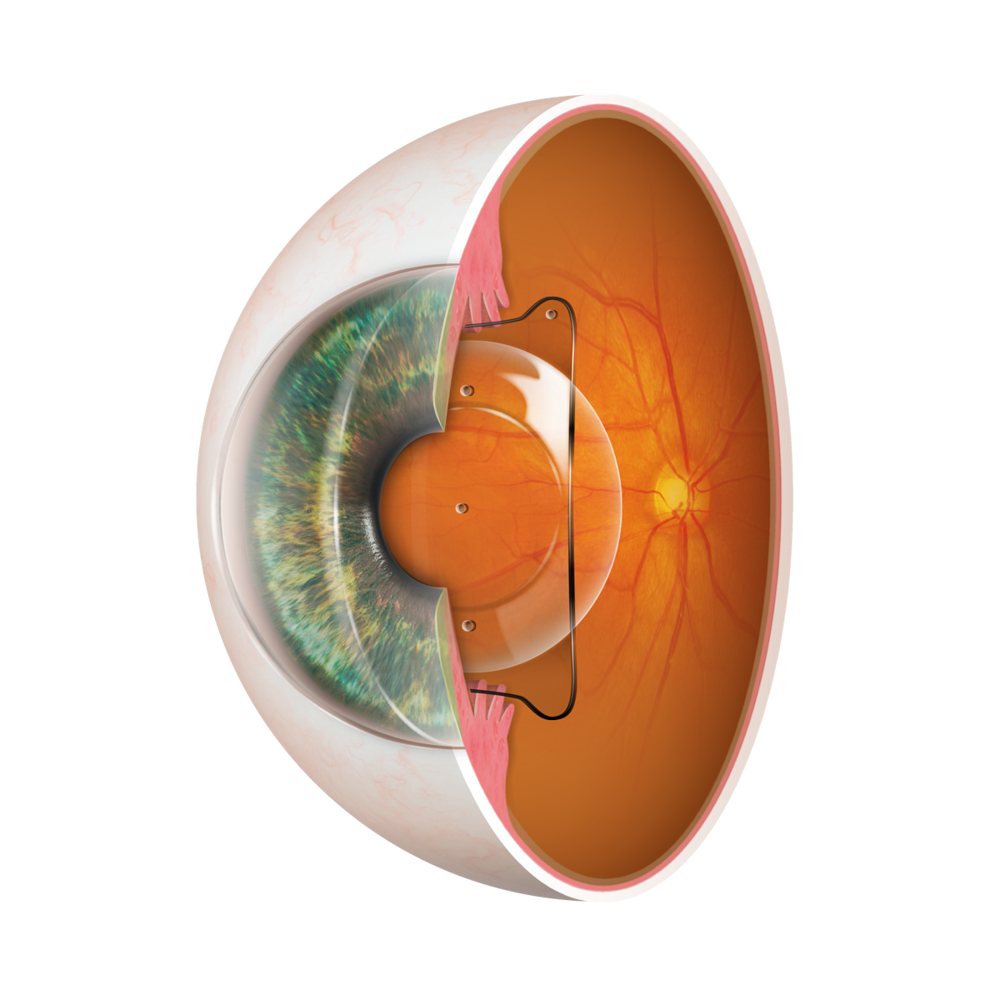
Illustration of an opened eye: the EVO ICL sits behind the iris in front of the natural lens

In short: ICL, phakic lens and implantable contact lens refer to the same treatment – an additional lens in the eye, while your own lens is preserved.

The ICL (Implantable Collamer Lens) is a wafer-thin, flexible additional lens that in addition to the natural lens is placed in the eye. It sits invisibly between the iris and the natural lens, cannot be felt, and permanently corrects visual acuity within the eye.

At EyeLaser Zurich we use the EVO/EVO+ Visian ICL from STAAR Surgical – a proven phakic lens made of Collamer, a biocompatible material with integrated UV protection – as well as the Eyecryl Phakic from Biotech, made of hydrophilic acrylic.
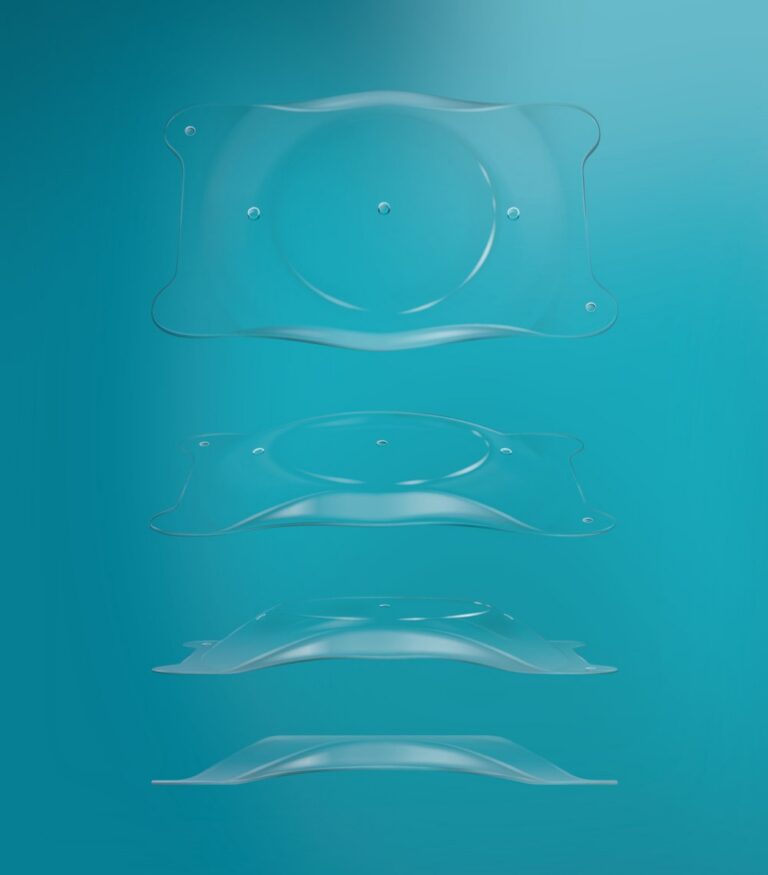
The EVO ICL shown four times on a turquoise background, from top view to flat side view

The EVO ICL from several angles: wafer-thin and slightly curved

Illustrations: STAAR Surgical.

Who is the ICL suitable for?

ICL bei Alterssichtigkeit

Correctable visual defects

  • Myopia: up to -25 diopters (lens power)
  • Farsightedness: up to +10 diopters
  • Astigmatism: up to 6 diopters (toric lens)

When is the ICL the option of choice?

  • Thin or irregular cornea: also if early keratoconus is suspected (forme fruste)
  • Stabilised central keratoconus: often after crosslinking
  • Dry eyes: the ICL does not make the symptoms worse, as the corneal nerves are not affected
  • Values beyond the laser limit: this limit depends on the KRC recommendations and corneal thickness; for young, highly short-sighted people also instead of an early lens exchange

Wish for a reversible solution: the ICL can be removed or replaced at any time

ICL and presbyopia

Surgeons in protective clothing at the operating microscope in the operating room

From the mid-40s, reading glasses become unavoidable for many people. The ICL can also be a solution here:

  • Mini-monovision with the ICL: one eye is set for distance, the other slightly for near – the brain compensates for this. It can be tested beforehand with contact lenses

EVO Viva: a presbyopia lens with extended depth of focus (EDOF) is available as an option. The KRC classifies such lenses as a borderline indication (time-limited effect, higher risk of lens clouding), so we only use it after detailed counselling. The standard remains proven mini-monovision, tested beforehand with contact lenses

Am I suitable for the ICL?

The suitability test takes around 45 seconds and shows whether the ICL, a laser procedure or a refractive lens exchange is more likely to be an option. The recommendation becomes binding after the pre-examination (CHF 300, credited towards the cost if you go ahead with treatment).

Suitability test: which route to sharp vision suits you?

When is an ICL not suitable?

Ältere Frau mit grauem Haar lächelt – der Graue Star betrifft meist Menschen ab etwa 60
  • During pregnancy or breastfeeding
  • If the anterior chamber of the eye is too shallow (less than 2.8–3.0 mm) or the corneal endothelial cell count is too low
  • With advanced cataract, glaucoma, inflammation inside the eye (uveitis) or progressive keratoconus
  • With unstable prescription – stable values and, as a rule, an age of 21 to 60 are required (as approved; with a stable prescription also from 18)

If the ICL is not suitable, there is often another route: with a healthy, sufficiently thick cornea, laser eye surgery is an option; with incipient presbyopia (from around 45 with long-sightedness, otherwise from around 55) or an incipient clouding of the lens, refractive lens exchange; with progressive keratoconus, stabilisation comes first (keratoconus).

The procedure in Zurich – clear vision in just 20 minutes

The procedure step by step

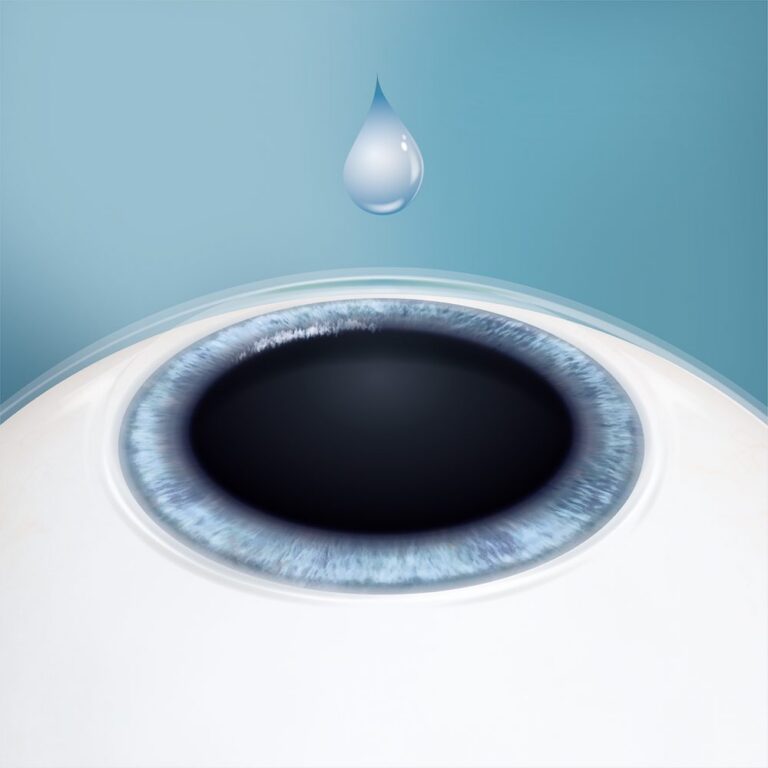
Illustration: a drop falls onto the eye, the pupil is dilated

1. Eye drops dilate the pupil and numb the eye.

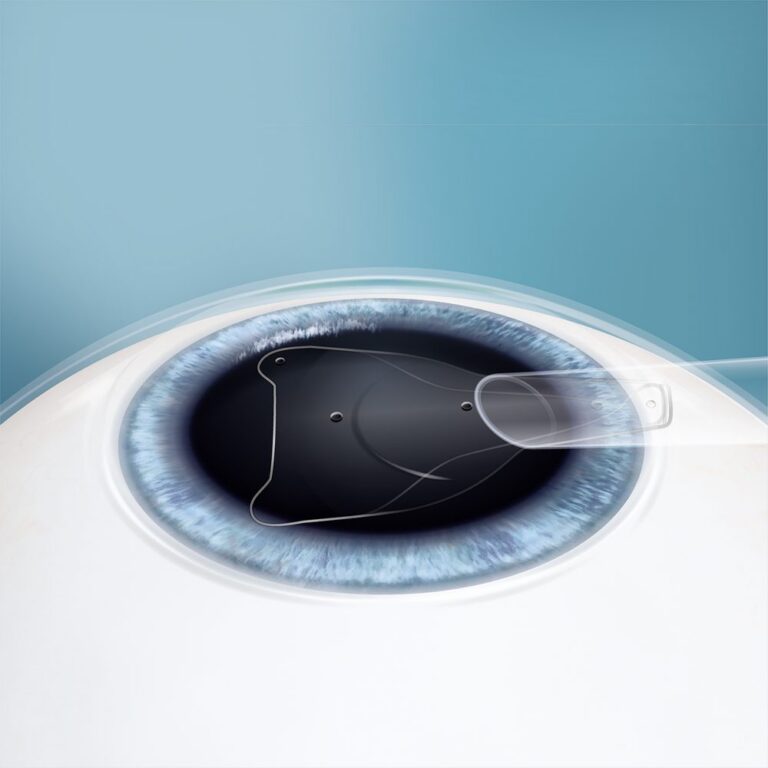
Illustration: the rolled-up ICL is pushed into the eye from the side with an injector through a small incision

2. The rolled-up lens is inserted with an injector through the small incision of about 3 mm.

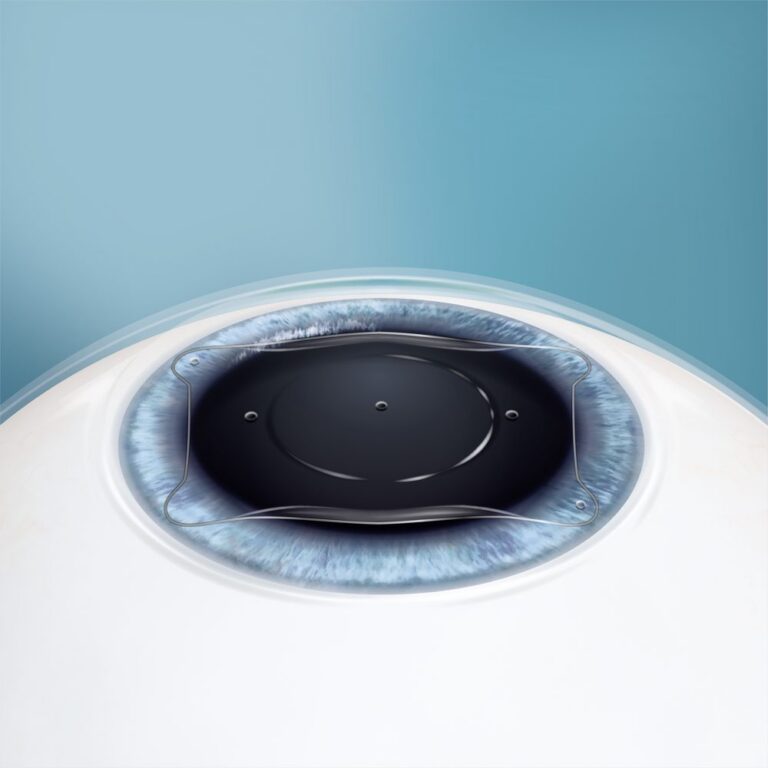
Illustration: the unfolded ICL lies in front of the iris, over the dilated pupil

3. Inside the eye, the lens unfolds, at first in front of the iris.

Illustration: the small feet of the ICL are tucked behind the iris, the optic lies centred in the pupil

4. The four small feet (haptics) are gently tucked behind the iris.

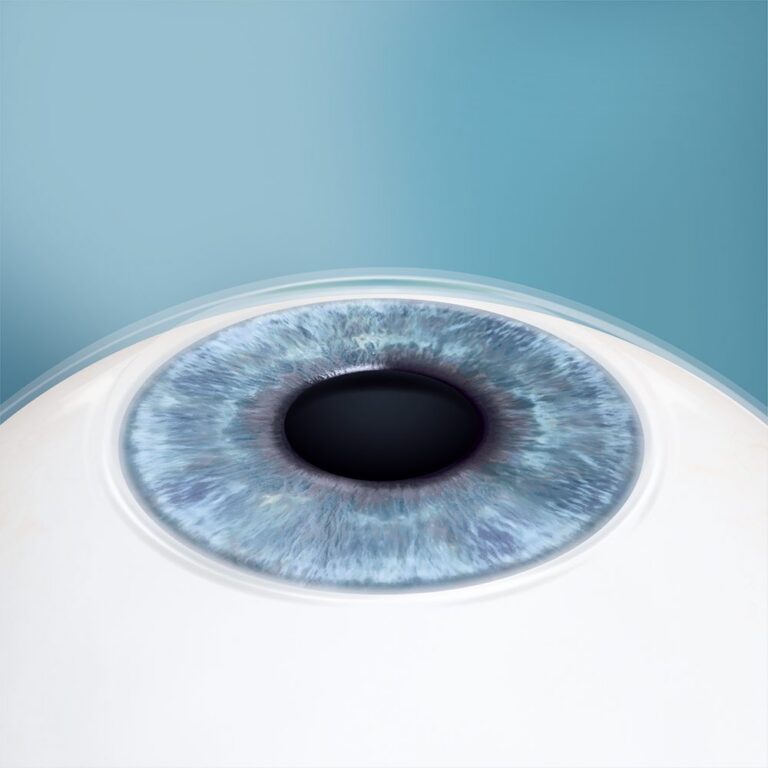
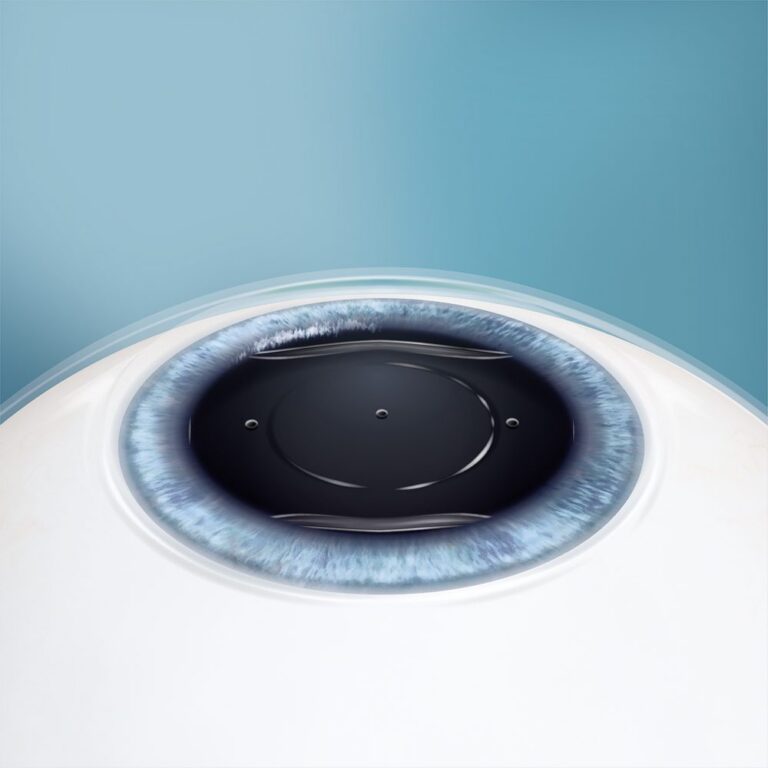
Illustration: eye after the procedure with a narrow pupil, the lens cannot be seen from outside

5. After the procedure the pupil is narrow again and the lens cannot be seen from the outside.

Cross-section of the eye: the ICL between the iris and the natural lens

6. Cross-section: the ICL sits between the iris and your own lens.

Illustrations: STAAR Surgical.
Woman with a clipboard next to the German words “Which laser eye method?” and “Life without reading glasses”
  • Preparation: Anesthesia with eye drops, largely painless
  • Access: Tiny, self-healing 3 mm incision on the cornea
  • Implantation: the folded ICL is gently inserted and unfolds in the eye and is then positioned behind the iris

Result: Significantly better visibility, often immediately noticeable

High-tech diagnostics & safety

SmartSight

The EVO ICL has a central AquaPort that preserves the natural flow of aqueous humour – this eliminates the need for an iridotomy. The Eyecryl Phakic also has such a central opening (central-flow lens).

In the first few weeks, a temporary rise in pressure as well as halos or glare are possible; in the long term, rarely, a clouding of the lens (1.7 % in eight years, Kamiya 2021). Details in the section on risks. We determine the lens size using OCT Anterion and MS-39 with AI-assisted formulas: around 400 ICLs with AI sizing at our locations – no ICL exchange because of size.

ICL, laser eye surgery or refractive lens exchange: which suits you?

ICL (phakic lens) Laser eye surgery (SmartSight, Femto-LASIK, Trans-PRK) Refractive lens exchange
Principle Additional lens in front of your natural lens Cornea is reshaped Artificial lens replaces your natural lens
Typical age 21 to 60 years (as approved), from 18 with a stable prescription from 18 years, stable values from around 45 with long-sightedness, otherwise from around 55; from around 60 usually the better choice
Correction range up to −25 / +10 dpt, cylinder up to 6 dpt according to the recommendations of the KRC and corneal thickness high values too; presbyopia in addition
Cornea remains untouched is treated remains untouched
Natural lens remains remains is replaced
Reversible yes, lens can be removed no artificial lens exchangeable, natural lens not
Long-term check-ups annually, for life after healing, as needed annually recommended
Price per eye CHF 4’500 CHF 1’500 to 3’000 depending on the procedure CHF 5’000, with femtosecond laser CHF 6’000

More on this: SmartSight · Femto-LASIK · Trans-PRK · refractive lens exchange · Comparison in the guide: ICL or laser eye surgery?. A laser procedure under another brand name? See SMILE or SmartSight?

Check suitability

Which follow-up examinations are needed after an ICL?

Day 1

First follow-up examination; usually good vision for everyday life already. Office work usually possible after about 3 days.

Week 1

Check of eye pressure and lens position; drops according to schedule, on prescription.

Month 1 and 3

Visual acuity, distance to your natural lens (vault) and eye pressure; included in the price.

Annually thereafter

For life: eye pressure, vault and endothelial cell count, CHF 180 per check-up.

Transparency

What are the risks of the ICL, and how common are they?

The ICL can be removed again — that is an important safety net. The figures come from studies, not from our own data.

Risk Frequency in studies Source What we do
Loss of inner corneal cells (endothelium) 3.8 % after around 21 months (18 studies); in the approval study −2.3 % after six months Kisiel and Gurumurthy 2024; Packer 2022 Endothelial cell count at every annual check-up
Lens opacity (cataract) 1.7 % (3 of 177 eyes) in eight years, all with pre-existing peripheral opacity; none in six months in the approval study Kamiya 2021; Packer 2022 Monitoring; if necessary, ICL removal and refractive lens exchange
Second procedure (usually re-rotation of a toric lens) 0.47 % of 2’970 eyes, mean follow-up 16.7 months Packer 2018 Lens position at every check-up; re-rotation as an outpatient
Rise in eye pressure no pressure rise due to angle narrowing in the approval study (629 eyes, six months) Packer 2022 Pressure measurement in the first few days and annually
Retinal detachment 1 of 2’970 eyes (0.034 %) at 16.7 months of follow-up; by comparison, after refractive lens exchange for short-sightedness above −12 dpt, 8.1 % after seven years Packer 2018; Colin 1999 Retinal examination beforehand; the risk inherent to the short-sighted eye itself remains
Halos and glare common in the first few weeks, usually subsiding; no reliable frequency figure for the EVO generation – Information; check of lens position

On the retina: the figures for ICL (16.7 months) and refractive lens exchange (seven years) come from observation periods of different lengths and are not directly comparable. The lens size is determined by OCT with the Anterion and the MS-39; the aim is a distance to your natural lens of 250 to 750 µm.

Night vision after ICL implantation

Whether you can drive safely at dusk and at night after the procedure is one of the most common questions at the pre-examination. That is why we measure the pupil diameter in low light and take it into account when choosing the lens: the optical zone of the ICL should cover the dilated pupil as far as possible. If halos around headlights occur, they usually become weaker within a few weeks.

View through the windscreen by day: winding mountain road, oncoming car, clear view

By day

The same view after dark: road lit by headlights, oncoming car with its lights on

After dark

Illustration, not the result of a specific patient. Material: STAAR Surgical.

Your safety net: Should laser fine-tuning be necessary in the first year after the procedure, it is included in the price at EyeLaser Zurich. And for emergencies: during the first 24 hours after the procedure your surgeon can be reached around the clock.

How much does an ICL cost in Zürich?

Lächelnde Patientin auf der Liege unter dem Operationsmikroskop, daneben der Chirurg mit Mundschutz
  • CHF 4’500 per eye across the entire correction range: procedure, lens, protective shield and follow-up examinations in the first three months; any laser fine-tuning in the first year is included.
  • Pre-examination CHF 300, credited towards the cost of treatment.
  • Separate: prescription medication and eye drops; then the annual check-up for CHF 180.
  • Custom-made lenses outside the STAAR EVO+ range: CHF 6’000 per eye, as they are made specifically for you; delivery time a few weeks.
  • Instalments: six months interest-free directly with us; longer through HeyLight with a credit check and interest.

Health insurance: As a rule, you pay for the ICL yourself. Supplementary insurance sometimes contributes (for example CHF 500 to 1’500); obtain a cost approval before the procedure, we will support you with this. In the case of a large difference between the eyes or very high values, basic insurance may contribute after cost approval. All lens prices at a glance: Lens implantation costs.

Who implants the ICL at EyeLaser Zurich?

Dr. Victor Derhartunian

Depending on the case, the ICL is implanted by Dr. med. univ. Victor Derhartunian or Dr. med. Myron Kynigopoulos. Dr. Derhartunian is the medical director: he oversees all findings and measurement data, including the calculation of the lens size, and personally performs every laser treatment.

  • More than 1’500 ICLs at EyeLaser Zurich since 2013
  • Lenses from STAAR Surgical (EVO ICL) and Biotech (Eyecryl Phakic)
  • Size determination by OCT with Anterion and MS-39: around 400 ICLs with AI-assisted calculation at our locations, no ICL exchange because of size
  • Strehlgasse 33, 8001 Zürich

Overview of all options: Lens surgery in Zürich.

Experiences with the ICL

Genuine Google reviews from our patients can be found at the end of this page, and more voices on our testimonials page.

Overview

All procedures compared

On the overview page laser eye surgery in Zurich you find all procedures side by side, with the suitability traffic light, documented results, healing timeline, fixed prices and instalment examples.

Other procedures at EyeLaser: SmartSight · Femto-LASIK 7D · Trans-PRK · SMILE or SmartSight? · PresbyMAX

By refractive error: Short-sightedness · Long-sightedness · Astigmatism · Presbyopia · Keratoconus

Costs and financing: All prices · Health insurance · Treatment process · Patient experiences

Sources

Study figures come from published research and are not our own data. Study populations differ in age, baseline values and lens model.

  1. Larivoir NB, Ribeiro ACS, Morgado CR et al. Efficacy, Predictability, and Safety of Phakic Implantable Collamer Lenses V4c and V5: A Systematic Review and Meta-analysis. J Refract Surg 2025 Dec. PubMed 41369665
  2. Packer M. Evaluation of the EVO/EVO+ Sphere and Toric Visian ICL: Six Month Results from the United States Food and Drug Administration Clinical Trial. Clin Ophthalmol 2022;16:1541–1553. (Author is a consultant to and shareholder of STAAR Surgical.) PubMed 35645557
  3. Kisiel FB, Gurumurthy GJ. Endothelial cell loss post-implantable collamer lens V4c: meta-analysis. J Cataract Refract Surg 2024;50(4). PubMed 38194352
  4. Kamiya K, Shimizu K, Takahashi M et al. Eight-Year Outcomes of Implantation of Posterior Chamber Phakic Intraocular Lens With a Central Port for Moderate to High Ametropia. Front Med (Lausanne) 2021;8:799078. PubMed 34977099
  5. Packer M. The Implantable Collamer Lens with a central port: review of the literature. Clin Ophthalmol 2018;12:2427–2438. (Author is a consultant to STAAR Surgical.) PubMed 30568421
  6. Colin J, Robinet A, Cochener B. Retinal detachment after clear lens extraction for high myopia: seven-year follow-up. Ophthalmology 1999;106(12):2281–2284. PubMed 10599657
  7. German Commission for Refractive Surgery (KRC) of DOG and BVA: recommendations, as of 2022. augeninfo.de/krc

FAQ – The most frequently asked questions about ICL

What does ICL mean – and what is a phakic lens or implantable contact lens?

ICL stands for Implantable Collamer Lens, often called an implantable contact lens. Technically it is a phakic lens: an additional lens placed in the eye while your own lens stays in place (“phakic” means that the natural lens is still present). It is made of Collamer, a biocompatible material, sits between the iris and your own lens and works like a permanent visual aid that cannot be seen from the outside.

Is ICL surgery painful?

No, ICL surgery is largely painless. We use anaesthesia in the form of eye drops, so the procedure is comfortable for you. You only feel slight pressure.

How long does the procedure take?

The procedure is very short and is performed on an outpatient basis. The implantation takes only about 20 minutes per eye.

Can you feel or see the lens?

You cannot feel the ICL in your eye, and other people cannot see it either. It sits behind the iris, so it is completely invisible from the outside.

How long does an ICL last?

The ICL is designed to remain in the eye permanently and is very durable. Its greatest advantage is that it can be removed or exchanged for another lens at any time if necessary.

What is the difference from LASIK?

Unlike LASIK, which permanently reshapes the cornea, ICL surgery places an additional lens in the eye. The ICL method is reversible and is also suitable for correcting high prescriptions. The two methods complement each other: according to the KRC recommendations, the ICL is possible from about −1 or +1 dioptre; with a healthy cornea of sufficient thickness, laser treatment is an equally proven choice.

When can I work or do sport again?

Light activities such as office work can usually be resumed after about 3 days. Light training without body contact is possible again after around one week; for swimming or contact sports, a break of a few weeks is recommended.

Does health insurance cover the cost of the ICL?

At EyeLaser Zurich, you generally pay for the ICL yourself: CHF 4’500 per eye. Supplementary insurance sometimes contributes, often between CHF 500 and 1’500. Obtain a cost approval before the procedure; we issue the necessary documents and support you with this. In the case of a large difference between the eyes or very high values, basic insurance may also contribute, likewise after cost approval.

Does the ICL also correct astigmatism?

Yes, there are special toric ICL models. These lenses correct not only short-sightedness or long-sightedness, but also astigmatism of up to 6 dioptres.

What happens if I later develop a cataract?

A later cataract can be operated on as usual: the ICL is removed during the procedure. The clouded natural lens is replaced by an artificial lens (IOL) as usual. Because the vitreous and the natural lens remain untouched until then, no treatment option is lost.

How many ICLs has EyeLaser Zurich implanted?

Since 2013, EyeLaser Zurich has implanted more than 1’500 ICLs, using lenses from STAAR Surgical (EVO ICL) and Biotech (Eyecryl Phakic). We determine the size of the lens by OCT with the Anterion and the MS-39; in around 400 ICLs with AI-assisted calculation at our locations, no lens had to be exchanged because of its size.

When will I see clearly again after an ICL?

Most people can see well enough for everyday life the day after an ICL; slight fluctuations and halos subside in the first few weeks. In the approval study on the EVO ICL, 87.6 % of eyes saw 20/20 or better without glasses after six months (Packer 2022). At EyeLaser Zurich, we assess the result at the check-ups after one and three months.

What are the disadvantages of an ICL lens?

The ICL is a procedure inside the eye and requires a lifelong annual check-up of eye pressure, lens distance and inner corneal cells (CHF 180 at EyeLaser Zurich). At CHF 4’500 per eye, it costs more than most laser procedures. Rarely, your natural lens becomes cloudy later (1.7 % in eight years, Kamiya 2021); in that case the ICL is removed and a refractive lens exchange is performed.

How much does an ICL cost in Zürich?

At EyeLaser Zurich, an ICL costs CHF 4’500 per eye across the entire correction range, including procedure, lens, protective shield and follow-up examinations in the first three months. The pre-examination for CHF 300 is credited. Medication is available on prescription; the annual check-up costs CHF 180. Six monthly instalments of CHF 750 per eye are interest-free.

Who implants the ICL at EyeLaser Zurich?

At EyeLaser Zurich, depending on the case, the ICL is implanted by Dr. med. univ. Victor Derhartunian or Dr. med. Myron Kynigopoulos. Dr. Derhartunian is the medical director and oversees all findings and measurement data, including the calculation of the lens size. He personally performs any laser fine-tuning after the ICL; in the first year it is included in the price.

Which follow-up examinations are needed after an ICL?

After an ICL, EyeLaser Zurich carries out check-ups on the following day, after one week, and after one and three months; these appointments are included in the price. After that, a lifelong annual check-up follows for CHF 180: eye pressure, distance between the ICL and your natural lens (vault) and the number of inner corneal cells. The check-ups take place at Strehlgasse 33 in Zürich.

Am I suitable for the ICL? Two ways to find out

The suitability test gives an initial assessment in around 45 seconds. In the free initial consultation, in person at Strehlgasse 33 or by video, we clarify whether the pre-examination (CHF 300, credited towards the cost if you go ahead with treatment) is worthwhile for you.

Check suitability Question via WhatsApp · Call 044 221 95 02

Online appointment